In Memory
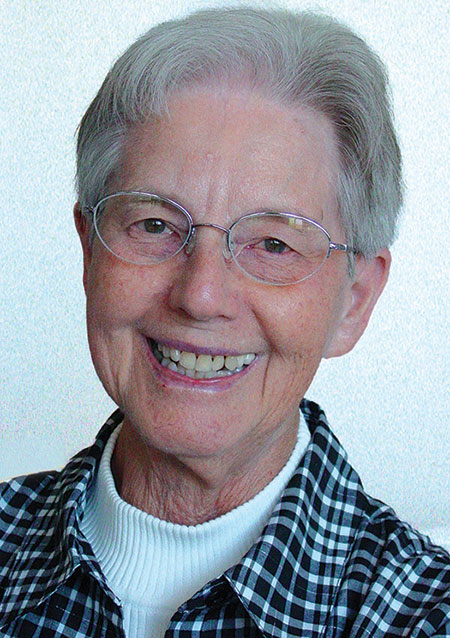
Sister Marie Lourde Steckler SL died Sept. 23, 2026, at Loretto Living Center on the grounds of Loretto Motherhouse in Nerinx, Ky. She had a steady stream of Community members and staff with her during her final days and nights. Known by some as “Lourdie” and by others as “Diana,” she was 90 years old and in the 70th year of her religious life. She had served in various nursing positions, mostly at the Motherhouse, for all of her adult life.
Editor’s note: Marie Lourde left us a wonderful oral interview in June of 2020. The following are selections quoted or paraphrased from that interview. The interview begins thus:
“I am Sister Marie Lourde Steckler, formerly Diana Margaret Steckler of Biloxi Miss., now living at Loretto Motherhouse in Nerinx, Ky.
“My childhood home was right about a block from the Gulf of Mexico in Biloxi, Miss. You could see the water from our property. Growing up, I had a wonderful home and three brothers. My mother had several miscarriages and she had two live births but the two children didn’t survive infancy.
“My dad’s family had a seed company in New Orleans and we always had a garden. Mom and Dad got married the day the banks closed in New Orleans for the Depression closed down everything. And then it seemed like just a couple of years, we were into World War II. Keesler Air Force Base was built in Biloxi two blocks behind us and, as I say, the Gulf was one block in front of us, so our part of the city was a narrow area. We would be aware of practicing, marching; every Saturday morning we would wake up to the men out there marching or the planes practicing. Sometimes, they went down in the water accidentally. That happened once when two of my brothers were out fishing and they helped the men out of the plane.
“Our home was so close to the water that once we proved to our parents that we could stop, look and listen for traffic and once we all knew how to swim, we were allowed to go down to the beach alone without our parents. We went down to crab from the sea wall and we could go out in the skiff fishing. And later, my grandfather built us a sailboat and we could go sailing too. We climbed trees, there were woods all around us, we trapped rabbits and squirrels and the boys hunted and we had fish. I mean, we never felt like we wanted for anything.
“In the first grade I was taught by the Mercy Sisters at our parish school. My oldest brother was two years ahead of me, and he was having a little trouble. So we switched to the public school. Daddy was on the school board, the public school board. The transition was okay. But that was in the days where every Sunday Monsignor would preach to the parents that if you’re sending your children to public school, you’re sinning. I was concerned about that, and so Monsignor had to talk to me. He said, ‘I need your father on the school board because we’re trying to get permission from the public school board to allow the boys at Notre Dame High School to use their facilities. So it was kind of a bargain, and that made it all right for us to be in the public school. The schools were good, so I enjoyed it very much. And we went to Catechism three days a week – on Sunday after Mass and then Tuesday and Thursday after school.
“I went to Webster College in St. Louis and fell in love with my teachers who were Sisters of Loretto. I didn’t know the Community before I went there to school. I admired them very much and they were wonderful teachers.
“Prior to going to college I had thought about religious life. But then I also talked about having 12 children someday. When I got serious about it, I decided that I could help more people if I were in religious life than I could otherwise so that’s what I wanted to do. I appreciated attending the Sisters’ Masses and prayer times in the college when I was available to do that. So I had developed a strong calling to religious life before I left Webster. I went only two years at that time, and then into the Novitiate for three years.
“The first time my parents were able to visit me in the novitiate was for my reception. They had loaded the car for their trip, packed with coolers with iced-down raw shrimp. Because that’s a big thing at home and they wanted to treat us all. Well, as they started up the hill at the Motherhouse, Daddy started smelling an odor that wasn’t good. He stopped and got out, opened the trunk to look in the back, opened the coolers and everything still was iced down. He couldn’t imagine what was going on. They came on up a little farther and saw the cemetery and he said to Mother, ‘Dotty, do you think they’re not burying the nuns deep enough?’
“Well, what was happening was we were having a locust plague. It was terrible. Thousands were dying at the foot of all the trees.
“From the Novitiate I was sent back to the House of Studies in St. Louis to complete my degree at Webster College, in biology and home economics. The summer after graduation, I taught at Webster College, supervising the biology lab. They were desperate. Sister Mary Luke had told me that she would send me on the missions for a year so I would get to know how the other Sisters would be living in small communities and what their schedule was like in teaching. She didn’t want me to miss out on what most Sisters would be doing across the country and the world. But then she called at the end of my school year, to ask if I would be willing instead to teach at Webster in the summer. And then she would let me work at the Motherhouse in the Infirmary for nine months to see if I really felt I could do that work, for the rest of my life. Well, it all worked out; after nine months I was still willing and so I entered St. Joseph Infirmary School of Nursing, in Louisville, run by the Sisters of Charity of Nazareth. I finished that three-year program, and then I came to the Motherhouse.
“When I first came and was put in charge of nursing, there were two telephones on the property. One was in what we called the pharmacy. It was the nursing headquarters on the second floor, still being used. It had a telephone. And the other one was in the Mother General’s Council Office, where the Service Coordinator is now. There were two automobiles. My employees usually weren’t able to drive a car so their husbands would bring them.
“In my first years, we had two laywomen in the nursing area helping out. And then I think one that did housekeeping – cleaning. And that was for three floors, the whole place. But we took care of our patients. We were responsible for cleaning their rooms and cleaning their habits. Their underwear and other things would go to the main laundry. Things have changed a lot. And I’ve been here all these years. My Mother used to say when I would go home to Biloxi for vacation, ‘Well you know you’ve been in Loretto longer than you’ve ever lived in Mississippi.’ Well as it turned out, the Motherhouse became her home at the end as we were able to care for her here in the Infirmary. I loved working in the Infirmary. I just loved caring for the elderly Sisters. I have a full heart. I have loved my life and thank God for it.
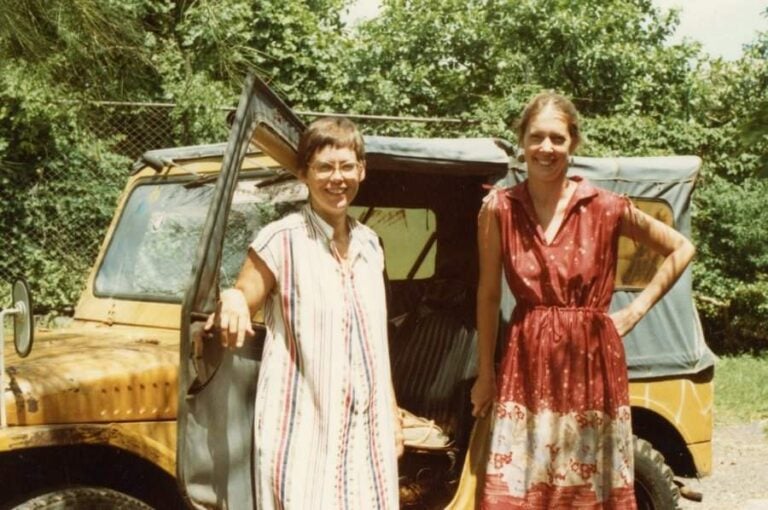
“I had lots of highlights throughout my life. After I started working at the Motherhouse Infirmary, I was given the opportunity to go to Frontier Nursing Service one summer. Sister Agnes Marie said, “You’re around old people all the time; I want you to find something else to do next summer. Just find something you like.’ And I’d heard about women nurses on horseback. Well, that sounded really good. By the time I got there, they were driving jeeps, the horses were for fun. I worked in a 21-bed hospital that first summer. And the second summer I was asked by Frontier Nursing Service to come back to relieve two long-term nurses who wanted a three-month vacation. Another nurse from elsewhere and I joined and lived in their house. We had assigned areas to go and follow elderly people in their homes or mothers with young babies who couldn’t get out. And then at night, in the evening we had clinic at Redbird, where we lived. It was a clinic room and so families would come there. I saw things I’d never seen before. You know, the water there, where people were drinking from creeks, also had little worms. So I saw the first little potty full of worms. I saw a rattlesnake bite and followed up with the man who survived it. I learned to identify ear problems that I had not learned about at nurses training. And I had independence, a lot of independence. It was a good experience. In my later years I was invited and permitted to go to Pakistan and enjoyed my time there too.
“The first summer I was with Frontier Nursing Service, I had a call – it was Sister Alban House, Sister Kay Carlew, Sister Janice Snyder, Sister Rita Ryon, and Sister Antonina Ryan. They wanted to start a small group in Stuart Hall and so would I like to do that? I said sure that sounded good. When I first returned to the Motherhouse I started out in a dormitory in the convent. And then Sister Mary Luke said she wanted us to form smaller groupings so we would experience small-group living. So that was a long-term experience starting at Stuart Hall.
“Mostly I think day-to-day living in community has been a tremendous gift and a grace. When we formed the community at Stuart Hall, Sister Antonina [Ryan] was with us. She had been living in that house prior to us moving over. She was probably my age then; I thought she was antique – I am now 84. She was a real dear. She insisted that even though we all ate the noon meal, which was the main meal, in the dining room of the Motherhouse, she said ‘We need to cook supper.’ And she meant cook supper. She wanted us to have salad, a hot food, protein and dessert. And she said ‘Sister Kay is teaching school out,’ – she was at Manton School at that time. “We need for Kay to experience a good meal with us in community; and we’ll say prayers at that time.” So, we did do that and we’ve had a strong community.
“[Speaking of changes,] I’ve seen great changes in the Loretto area around us, especially with homes and cars. There’s no longer a train; the business section is different. They have lovely homes now, and there are fewer farms. At that time [in the ‘50s], most of the people had a small farm and also had other jobs – like GE in Louisville was one where I think many, many men used to go, and some women. And then, for some time the Motherhouse was the largest place in the county for women to be working. We hired women for food service, for housekeeping and for nursing. Yes, Loretto has changed very much.
“I think the Sisters always had a strong relationship with the town of Loretto because we had a grade school in Loretto. The Ursulines had the parish grade school and high school. And we had the public school – I believe it was eight grades in Loretto. And that was still operating when I first came here. I’m not sure when it closed. And then, the more employees we had, hiring employees as time went on – then we got to know those people, too. You’re interested in everyone’s family
“The Loretto area keeps improving. Many have moved away because of need for employment but I think that there’s more employment in the area now with factories having moved into Lebanon, Springfield – Bardstown was the first. People don’t have to travel to Louisville, and then places like Loretto Motherhouse were soon able to give more decent wages than when we started out. And we hire more people now; we have many, many employees because we don’t have the Sisters doing those jobs anymore.
“I’m happy to be connected with them as much as I am, and I’ve belonged to the Beautify Loretto committee in town. And I had something to do with starting the Loretto Childcare Center, along with Kay Carlew. I used to say I’m having trouble keeping staff in the Infirmary because there’s no daycare around here. And we first tried to open one here at the Motherhouse over in the Auditorium. That didn’t happen, I think because we weren’t as open to traffic and noise, and we just couldn’t pull it together. So then we tried to use Stuart Hall where we were living. We said you know, we would be fine with that, we’d live elsewhere. But that didn’t happen either. Then the Loretto Parish school closed, and Kay made arrangements to get it open for childcare. So she kept it going, and even after she died she is keeping it going because donations are coming in. And I know she’s responsible. As is Alan Mattingly, who serves on the Childcare Board.
“We Loretto Sisters have been connected to Mattingly Funeral Home in Loretto for longer than my lifetime here as a nurse. The Mattinglys have been wonderful to us; they’re very good friends and their children likewise. I had wonderful women from that family as nurse-aides. [Another local business that we’ve been close to is] Southall Pharmacy in Lebanon. Sister Susan Carol McDonald lived here and worked in the Infirmary until she went to Vietnam to nurse orphans. At the end of the Vietnam War Susan called us from California to say a plane was coming in full of babies and we would be needing diapers and baby care things. She asked if we would please get them and send them to the airport by such and such a time. We called Southall Pharmacy, and I’m sure they emptied their shelves and got even more. Over the years they’ve helped us through anything they could.
“We’re closer, a lot closer to the businesses now and to the people of the area. Kay Carlew was involved with a lot with people of the area – teaching and then city council and the county school board. And I’ve stayed close to employees who had to retire eventually or get another job for higher wages. I couldn’t hold anyone back for that or for education either. I like to see people better themselves whenever they can.
“I can sum up my feelings this way: a class I had in the Novitiate was German for just one semester taught by one of my classmates. One word that I remember of that German class is ‘daheim.’ It means everything within you of a wonderful place to be – to live. That’s ‘daheim.’ For me, Loretto is ‘daheim.’ And because I’ve known so many of the families through work connections, I feel close to the families also. Many of their children, I feel like they’re my children, too. And the other strong connection is that I cared for so many of the people who are in the cemeteries, and I think their spirits are here and those of the ones previous. So, I truly love being here.
Sister Marie Lourde’s funeral Mass was celebrated by the Rev. Terry Bradshaw Oct. 3, with her wake Oct. 2, both at Loretto Motherhouse church. Please keep her in your prayers. May she rest in peace.