Feature

Feature
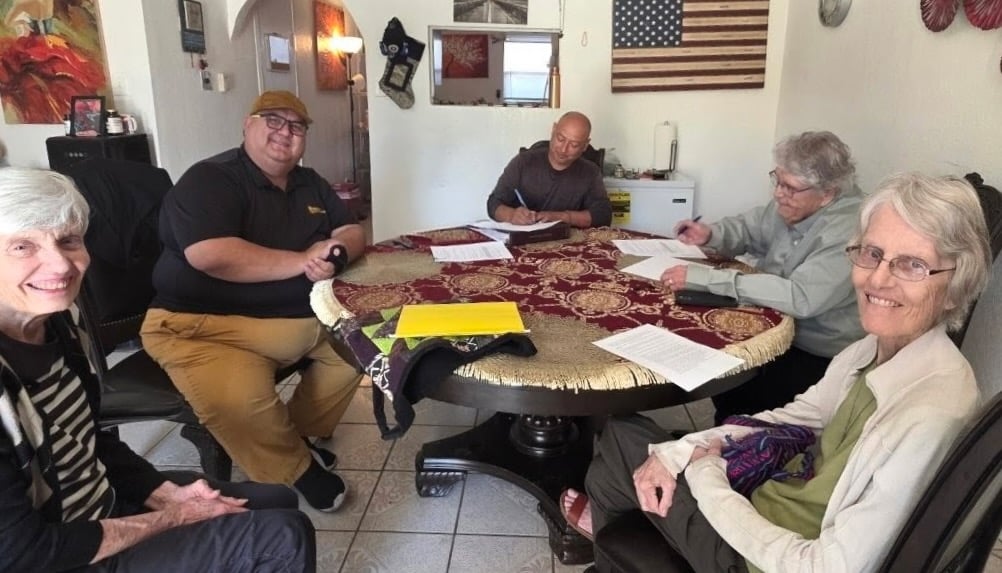
The Loretto Community has finalized a two-year lease agreement with Seeds by Canela, a non-profit agriculture project in San Elizario, Texas. The agreement is a concrete step toward the reparative justice to which Loretto committed at Assembly 2024 in creating the Land Justice Committee. The committee has since worked to identify partners and possibilities for two parcels of land, one in Kansas and the other near San Elizario.
St. Joseph’s at San Elizario was Loretto’s first establishment in Texas, opened in 1879 in an area long occupied by Mexicans, Indigenous Apache and Tague from the New Mexico pueblos. The sisters acquired the school property and nearby farm lands from local Hispanic families, some of whom continued to cultivate the lands for Loretto and later to lease them from Loretto. Approximately 100 acres remain today in Loretto’s hands, currently leased to a local cotton farmer. Soon, two acres of that field will be producing beneficial food crops under the direction of two retired military veterans, Juan Valadez and Ramon Olivares. Another eight acres will be set aside in the expectation that their nonprofit will successfully expand in the coming years.
The Land Justice Committee has built relationships with residents in the San Elizario area over several years, aided and encouraged by Lorenzo Luevano, Urban Agriculture Manager for the city of San Elizario. Land Justice Committee members Mary Margaret Murphy and Kathleen Corbett discovered a shared interest with Lorenzo in sustainable and regenerative growing practices and they told him of Loretto’s hope to make land opportunities available to Hispanic and/or Indigenous peoples of the area, peoples often displaced. Lorenzo introduced them to many small local projects, including Seeds by Canela, whose creators, Valadez and Olivares, themselves descend from Hispanic and Indigenous peoples.
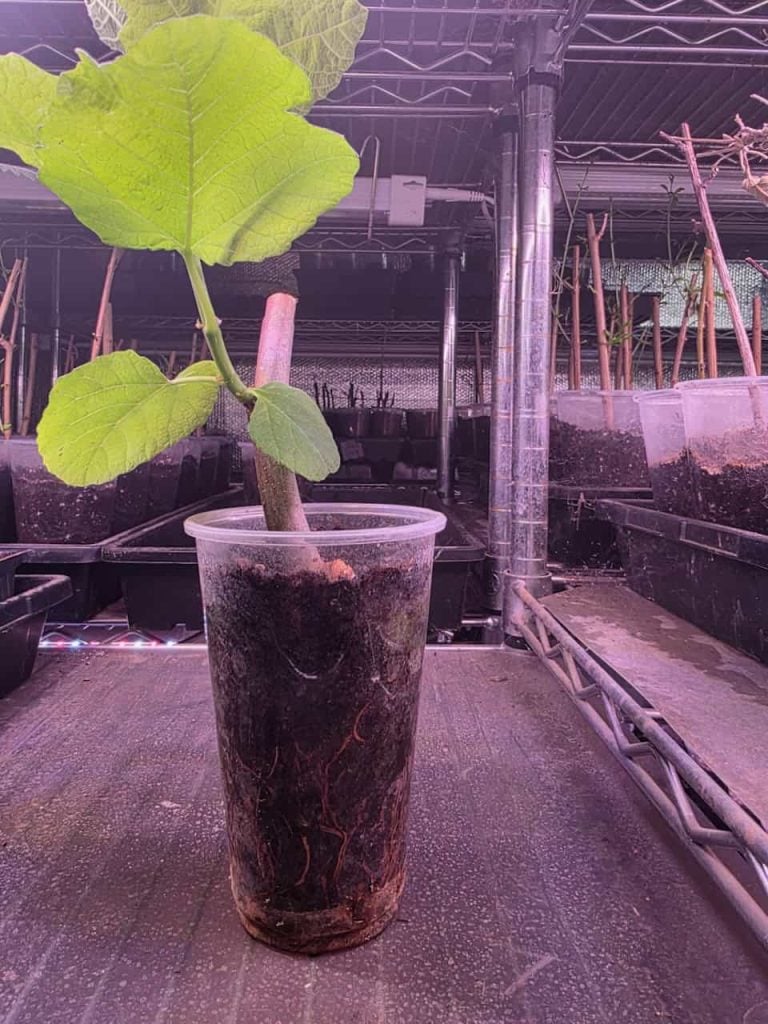
Valadez and Olivares have been operating Seeds by Canela from their home, planting and acclimating seeds from various parts of the world, using natural herbs including cinnamon (canela) to combat weeds. They offer education on how to maximize the growth of organic produce, fish and eggs, while sharing their harvests with nearby communities. Their goal: a future where providing healthy food will be an important service in the face of scarcity and potential famine. In taking up the lease of Loretto’s two acres, the retired veterans intend that volunteers and others involved include people with historic connections to the region, honoring Loretto’s desire that the land and its fruits continue to be available in justice to the descendants of San Elizario’s Hispanic and Indigenous peoples.
The second location for Loretto Land Justice efforts is in south central Kansas, a 320-acre farm inherited by Loretto from the family of Sister Genevieve Cavenaugh. This region is home to the lesser prairie chicken, once endangered and now in healthy recovery, thanks to the conservation practices the Cavenaughs began and Loretto has continued since inheriting the land in 2012. Land Justice Committee members Carole Eschen and I have been in regular communication with the Kansas Black Farmers Association, a nonprofit educational organization who have expressed solid interest in purchasing the farm for use in their young farmer education program. Several reverses caused by Department of Government Efficiency cuts have delayed progress, but the desire for a future partnership remains firm on both sides, spurred by a coincidence of history: Many of the ancestors of the Kansas Black Farmers were enslaved on Kentucky farms, within 50 miles of Loretto Motherhouse. The memory of persons enslaved at Loretto spurs our desire to share land with the Kansas Black Farmers. We’re still preparing the ground.