Feature

Feature
Have you ever seen a place where little children — poor, underprivileged, mentally and physically handicapped [sic] — can continuously knock at Opportunity’s Door? A place where patience and kindness take the place of ‘efficiency and regular routine’? Yes, there is such a place and it has been the means of guiding and directing many a forlorn and unwanted child along the Path of Life. It is the place at the side of a winding, narrow street along a crooked little stream in the heart of the state capitol city, Santa Fe, New Mexico.
Mary Harold Savage SL, cofounder and director, Santa Fe Opportunity School, October 1941
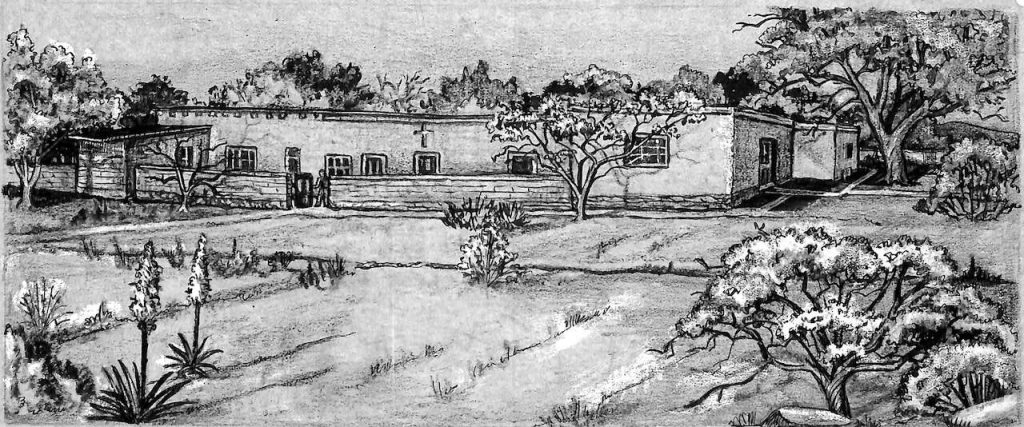
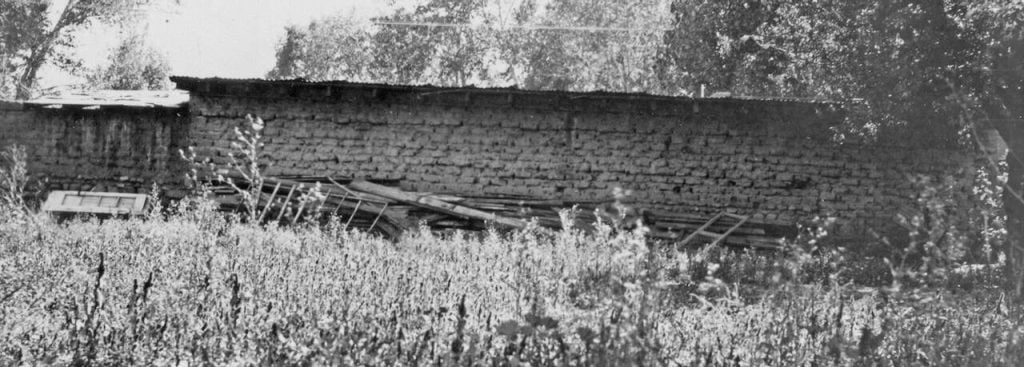
When the ceiling collapsed on their ecumenical school serving children with disabilities in Santa Fe, N.M., Mary Harold Savage SL and Miriam George Simon SL worried about the school’s future. The Santa Fe Opportunity School was an endeavor of the heart that had just opened the year before and served, as Mary Harold put it, “every pupil the other schools didn’t want.” The Sisters lacked the funds to rebuild; the Great Depression held the country in its powerful grip, and money was tight everywhere.
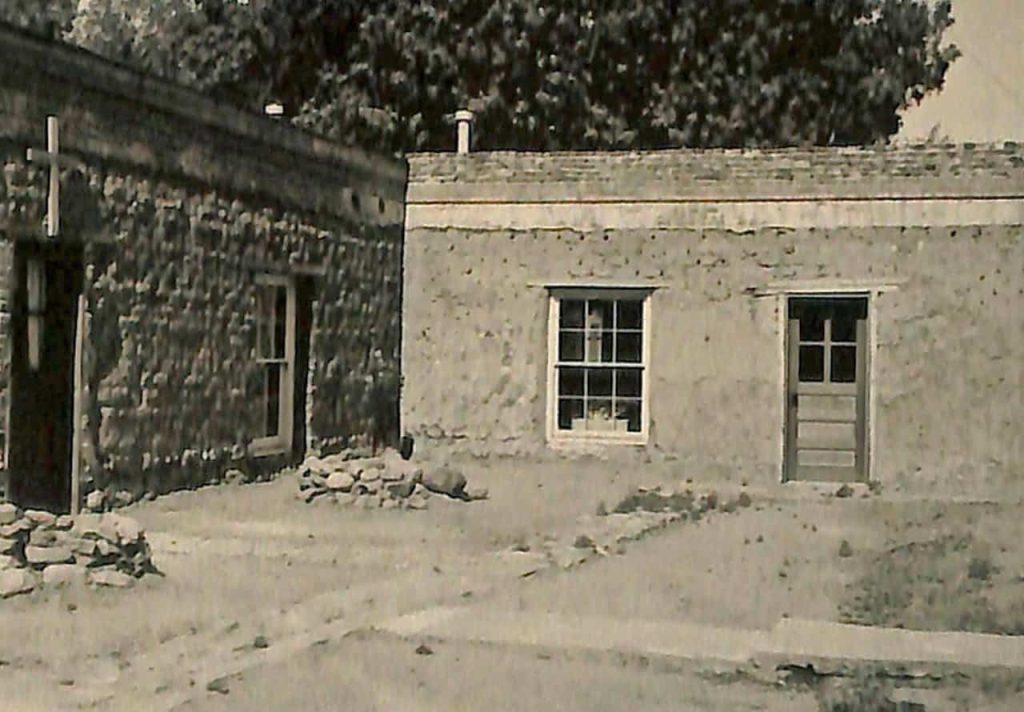
The Loretto way is to find a way. Miriam George had spotted a chicken coop while walking at nearby Loretto Academy and wondered if it might be repurposed. When the two headed over to take a look, a hog tied up in front of the building charged, keeping them at a distance. Nevertheless, the seed was planted, and they began dreaming. Then they began to act.
Locals, including parents, scoffed at their plan. Some said it would take years to complete the work, others that the walls would collapse on them; others predicted they’d catch diseases or lose their eyesight. Prayer by prayer and step by step, the Sisters persisted.

Santa Fe citizens chipped in vocational equipment, and many workers donated time. Inmates, their labor offered by a prison warden, were responsible for the initial work of clearing the space of dirt and debris. It took six weeks to haul out dirt that had accumulated up to the bottoms of the windows. When the Sisters turned their eyes on Loretto Academy’s stables, envisioning a manual training room, Civilian Conservation Corps workers who were assigned to a nearby park spent the summer volunteering in their free time, bringing ceiling beams, windows and bags of cement. When the Sisters asked where they were getting the materials, the answers were vague. Later, they learned that their volunteers had been selling pints of their own blood to purchase supplies. In the end, through faith, ingenuity and persistence, the chicken coop, stables, a pigpen, milk shed and storage space would be renovated.
Just a year after work began, the quixotic project had become an inviting school ready to welcome its students. Charlotte Thweatt CoL, who befriended Mary Harold in El Paso after the Sister’s retirement, shares that the school was for kids “who might not have found their needs met in schools of the times because they were different.” Mary Harold, school director, loved the children, Charlotte says, “and maybe that helped them love themselves and others, which in turn helped them take their place in the world.” She adds, “She saw in them what they could not yet see in themselves.”
I know that in bringing happiness to even one of these, the least of God’s children, I am richer than the richest millionaire.
Mary Harold Savage SL
Students lived with a myriad of challenges: partial blindness, hearing loss, Down syndrome and other disabilities, in addition to learning and/or behavioral issues. Mary Harold once wrote that “in a number of cases, poverty plays an important part.” Each child was precious, with a unique role to play in the world, and the Sisters’ commitment and kindness helped them flourish.
Two years after the school had launched, Mary Harold wrote about her students, “These children are handicapped [sic] mentally and physically because of home environment, undernourishment, paralysis and a partial loss of sight. Some cases are due wholly to delinquency.”
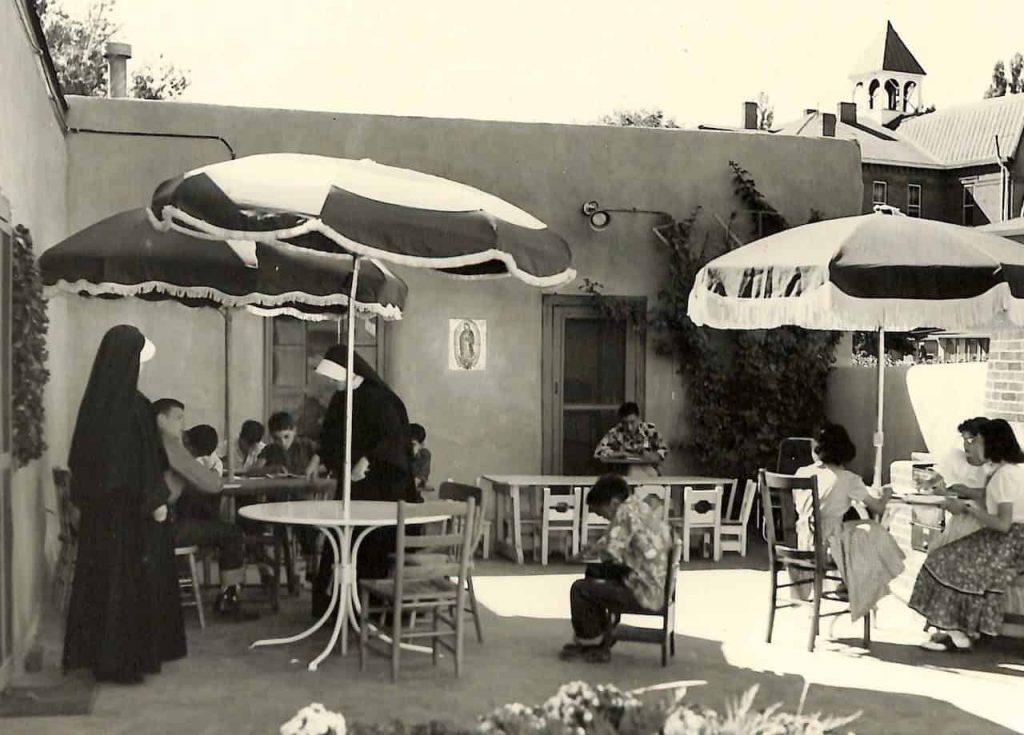
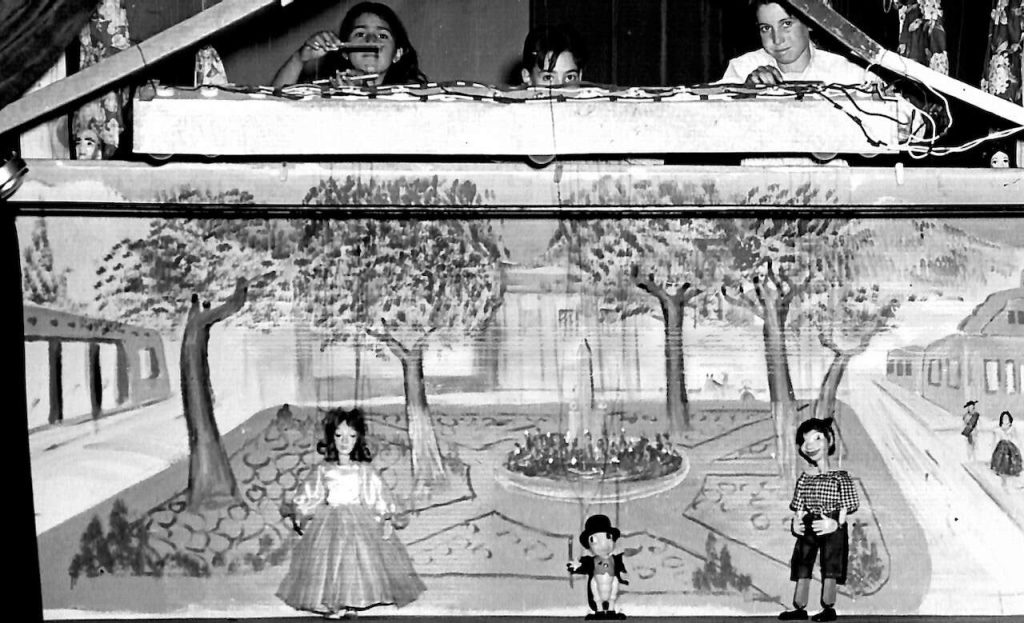
She wrote about Elisa, a 16-year-old who brought joy and humor to each day. After a performance of “Snow White and the Seven Dwarfs,” Mary Harold wrote, “Elisa asked how I liked ‘As White as Snow and the Seven Drops.'” Elisa struggled with severe disabilities, including near-blindness, and was mentally “about 8 or 9.” She said her happiest moments were when she was in school, and she followed Mary Harold everywhere. Mary Harold concluded, “If Elisa is the only one in my room that I have succeeded in making happy, I will feel that my work has not been in vain, and I also know that in bringing happiness to even one of these, the least of God’s children, I am richer than the richest millionaire.”
Out of necessity, and with insight and innovation, the Sisters were groundbreakers in special needs education starting decades before the term was coined, long before training was available to those who worked with children with disabilities. A 1965 article in Catholic Digest — 28 years after the school had opened — reported that the school “pioneered in the use of many teaching methods that are now common in schools for handicapped [sic] children. Film strips, slides, tape recordings, games that teach, flash cards and headphones are invaluable aids.” (The year after the Catholic Digest article was published, Sisters of Loretto in Denver would found Havern School, another pioneering Loretto institution for special needs children; Havern thrives today. See the winter 2020 issue for a feature on Havern.)
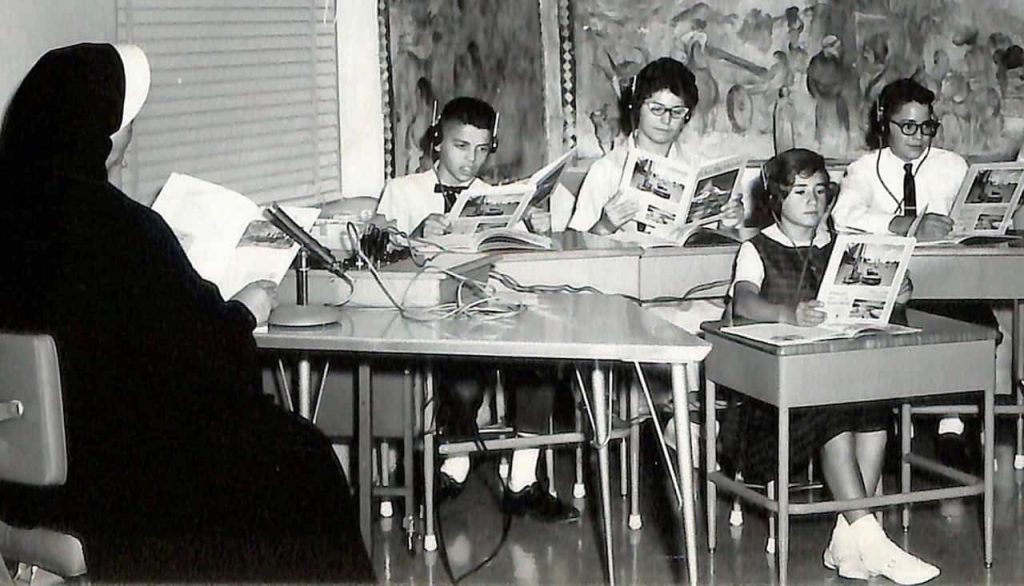
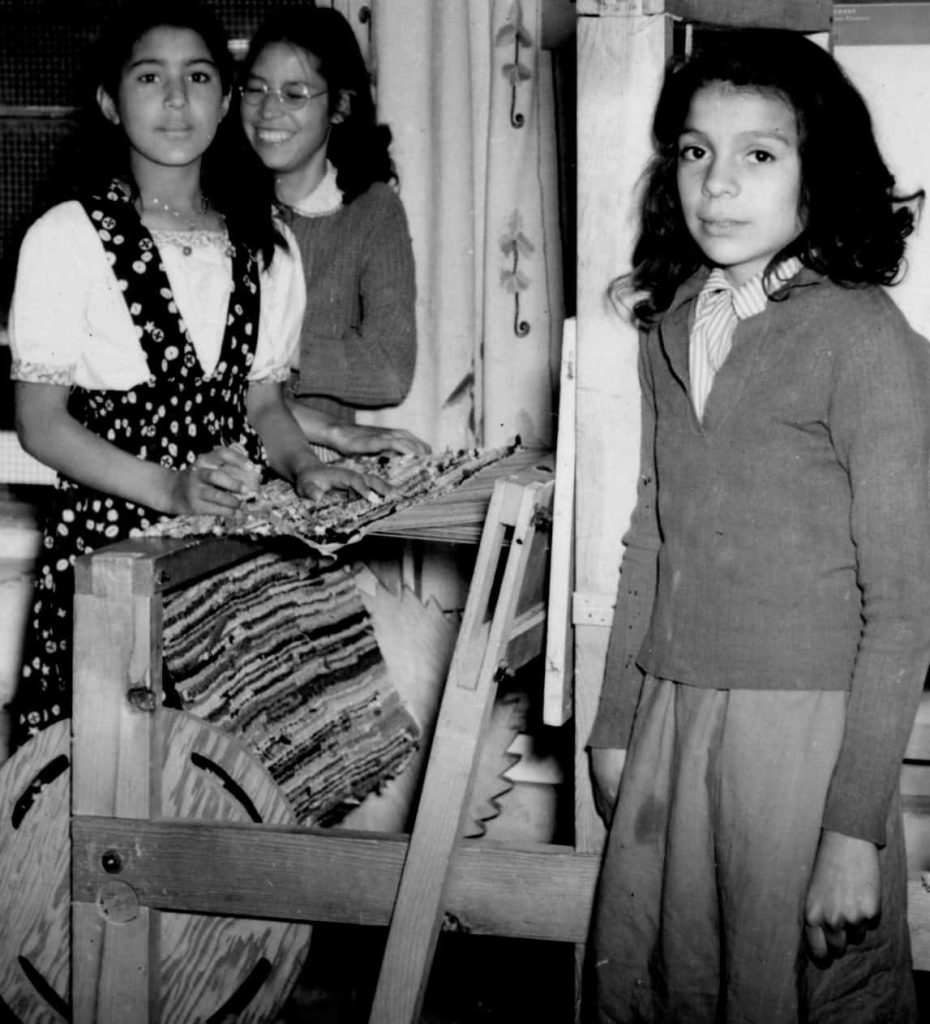
Desk learning was one element of a well-rounded education. Handwork was beneficial and greatly enjoyed. In the beginning, students, whose past experiences of school had been discouraging at best, showed up only on Friday, craft day — a problem solved by incorporating handwork into each day’s schedule. The Sisters were creative in finding materials. Mary Harold wrote, “Old rags, cloth scraps, orange crates and boxes can be created into quite useful articles.” Curtain remnants were sent by a friend in St. Louis who ran a factory, and they dyed the fabric for sewing projects. Scrap wood was donated by local lumber yards. A loom, workbench and jigsaw were donated by Santa Fe citizens.
Students learned to cook, sew, embroider, weave, carve and make and repair furniture. They cared for gardens, went bowling, took dance classes. Miriam George learned dance steps with the assistance of Dennis Ortiz, a student who knew all the dances, so she could help with daily practice.
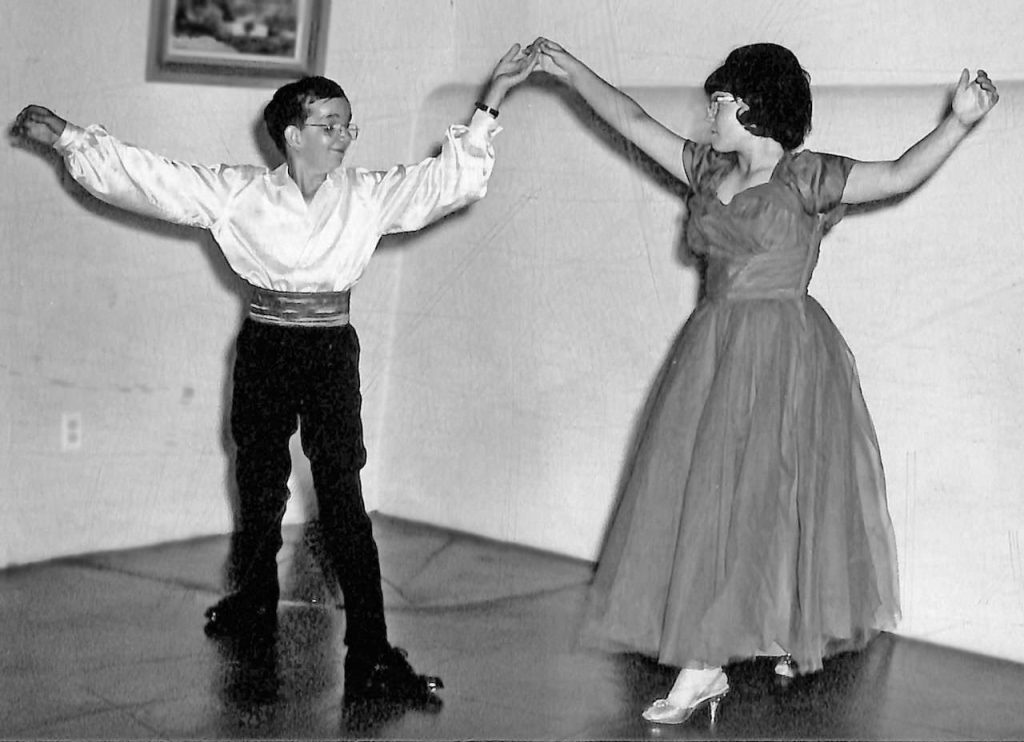
Celebrations were frequent. “We have a party every time we can drum up a reason for one,” Mary Harold wrote, “and they have been many.” They served dinner at Easter, Thanksgiving and Christmas, “with the children choosing their menus.”
Students so grew to love school that they became sad in the weeks before summer vacation. They ended up convincing the Sisters to hold summer school once a week so they could come in for crafts.
Mary Harold once wrote that the school “was built on Faith and Confidence … and has also been maintained on Faith and Confidence, and the voluntary donations of our many kind friends and benefactors.” The Sisters held regular fundraisers, and some supporters sponsored children with monthly donations. The number of students was limited out of necessity, but a child would not be turned away if the family lacked the ability to pay. Funds were always in short supply. The darkest period was during the years before the U.S. entered World War II. The school barely eked by. Again, the Sisters persevered, and would go on to love and serve special needs children for several more decades.
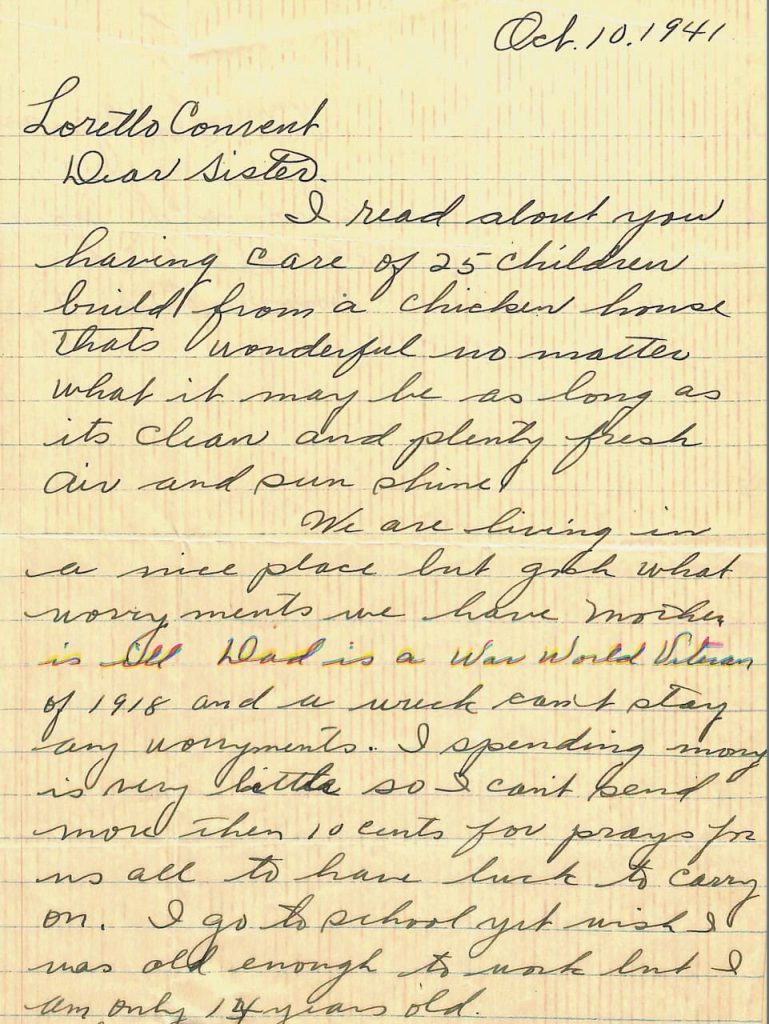
In the fall of 1941, Mary Harold had penned a letter to Nick Kenny, reporter for the New York Daily Mirror who, she’d read, never refused anyone who asked for help. She described the school that was “made from abandoned chicken houses,” adding, “We have 25 underprivileged children … not only mentally handicapped but also having a physical defect. You no doubt get hundreds of appeals for help; nevertheless, we are trusting that our request will find friendly hearts. ” The letter was published; hundreds responded. A 10-cent contribution came from a 14-year-old whose family had many “worryments,” with an ill mother, and a father who had served in the first World War and was “a wreck.”
The Loretto spirit that has transformed improbabilities into successes since 1812 shines through the story of the Santa Fe Opportunity School. It finally closed in 1970 when the property was sold. Over their 32-plus years of service, an estimated 700-800 children graced Mary Harold and Miriam George’s classrooms — children who blossomed under the opportunity to love and be loved, to learn and grow and take their places in the world with dignity, a legacy bestowed not only in New Mexico, but wherever in the world Loretto has influenced hearts, minds and souls

To read all of the articles in the fall 2025 issue of Loretto Magazine click here.