Feature

Feature

An online alert from political writer Joyce Vance brought attention from E. Jean Carroll (of fame from her battle with the U.S. President) about an act of quiet resistance originating, we think, in the Second World War in Norway. It is to wear a paper clip somewhere on clothing — collar, cuff or wherever.
The current campaign was begun by a teacher in Colorado Springs honoring victims of the Holocaust. In World War II, “Norwegians wore paperclips on their clothes to demonstrate their opposition to Nazism and anti-Semitism.” (paperclipcampaign.com) There had been a ban on wearing badges or anything with the image of the Norwegian king. Paper clips were subtle, unless one happened to notice.
Paperclips were once known as “binders,” and they often bind together papers or other lightweight items. “A seemingly innocuous item, the paperclip was a symbol of solidarity and unity (binding together).” However, there were arrests for “the simple act of wearing a paperclip.” (paperclipcampaign.com)
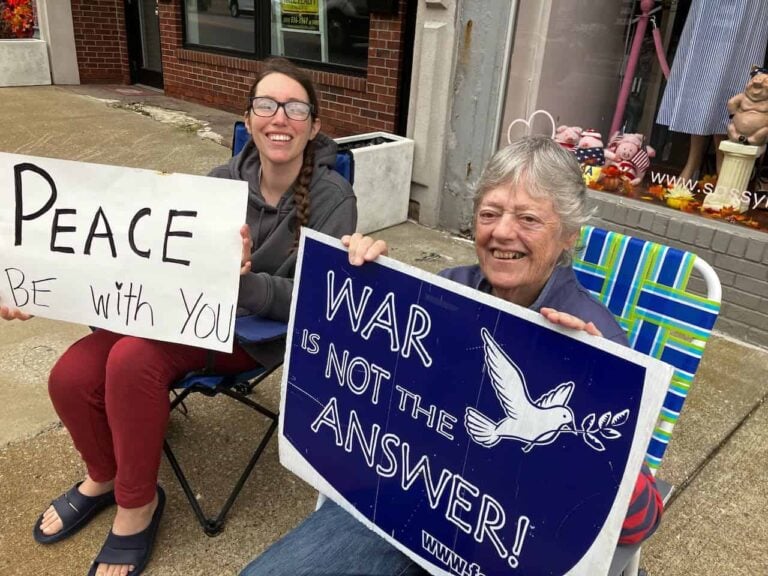
Now we have the opportunity to join this simple action. One may attach a paper clip to a t-shirt, a coat or anywhere. A question from someone who does notice and is curious is answered easily as to say it is a sign of solidarity opposing many policies of the current political administration. After Barbara Nicholas noticed the paperclips Mary Ann McGivern and I wore and asked about them, she carried the message to Anthony Mary Sartorius who shows off her paper clip in the photo above.