
LOREtto
LOREtto
In 2024, The Loretto Heritage Center received grant funding from the KY Historical Society, through the Local History Trust Fund, to fuel our project to reframe the most sensitive framed pieces in our artifact collection. This selection included paper documents, relics (affixed to paper), embroidery, and art created on paper, canvas, and board. Sixty-five pieces from our collection were identified as high priority and in urgent need of conservation framing. Our goal was to preserve and stabilize these pieces, effectively halting the damage that age and outdated framing techniques were causing. Preserving the legacy of the Sisters of Loretto, their students, Loretto Community CoMembers, and important figures in early Kentucky Catholic history is of paramount importance. By preserving the physical elements of this legacy, we can now safely exhibit these artifacts so that they may be used for teaching and exhibit purposes well into the future.
As it turns out, the completion of this project was a mere beginning and we’re continually assessing the framed pieces in our artifact collection, making improvements as needed. As more is understood in the field of fine art framing and document preservation, our physical management of the collection improves. Below, I will outline a few problems and solutions that we encounter at the Heritage Center.
The main thing to remember is that paper is not inert; it constantly reacts to the environment around it, the tiny microclimate within the frame itself, and the materials used on its surface as the problems below illustrate.
The most common physical damage you’ll find:
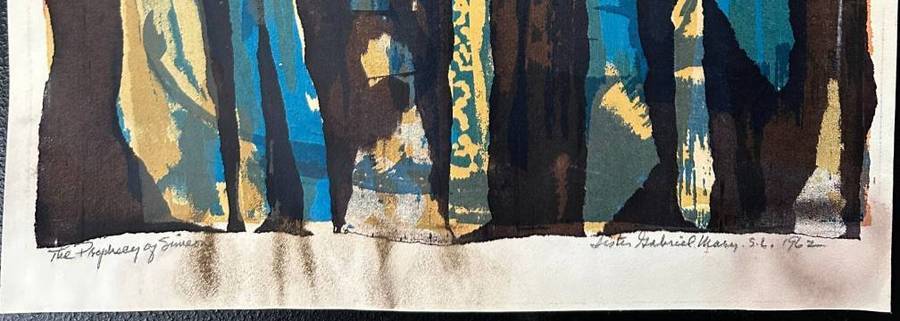
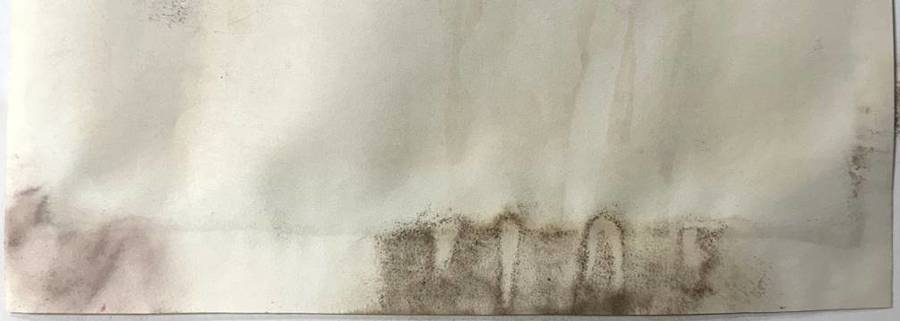
Front and back views of mold growth. This framed piece also showed evidence of water damage along the bottom edge which is most likely where the trouble started.
Detail of serigraph by Gabriel Mary Hoare, 1962

Fun fact: Printers used to run ads seeking cotton and linen rags for the paper-making process. Have you ever heard the term “daily rag” applied to a newspaper? That’s why! The first usage of this term referred to all newspapers. These days, “rag” is used as a derogatory word for inferior newspapers and tabloids.
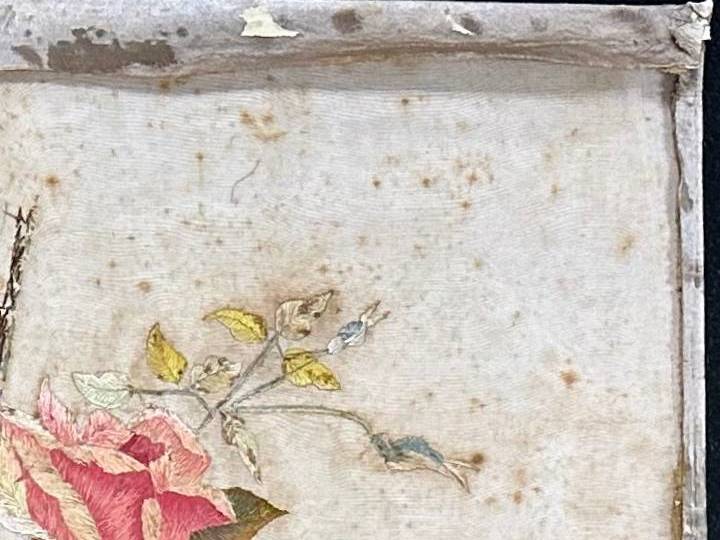
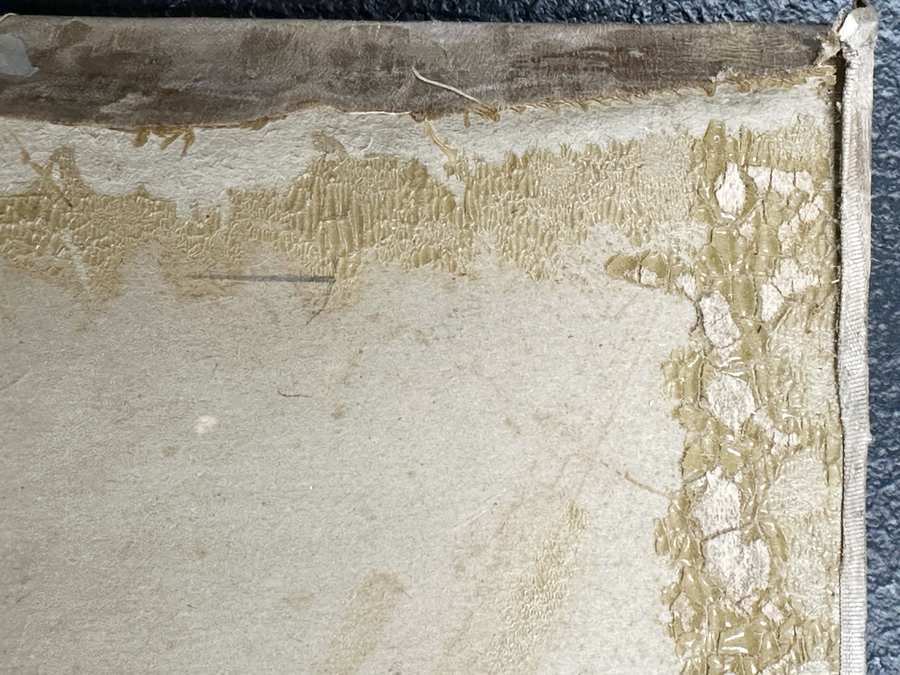
Here we have an embroidered silk which was glued to a piece of cardboard. The image on the left shows the back of the embroidery and the foxing which has occurred as well as the rough edge from being adhered with glue. The view on the right shows the original cardboard with glue residue. It looks bad but we were able to remove it from the glue and the silk fabric is still strong. The piece was handstitched to an acid-free board and space was created between the embroidery and the glass to allow for air circulation.
Embroidery from St. Columban’s embroidery school in Hanyang, China, 1933
We keep the temperature and humidity low in our building. Managing these aspects of our interior environment aid in the preservation of the collection. So, the next time you visit us at the Loretto Heritage Center Museum and Archives, bring a sweater. You’ll likely need it!
I will leave you with two happy “before and after” projects!
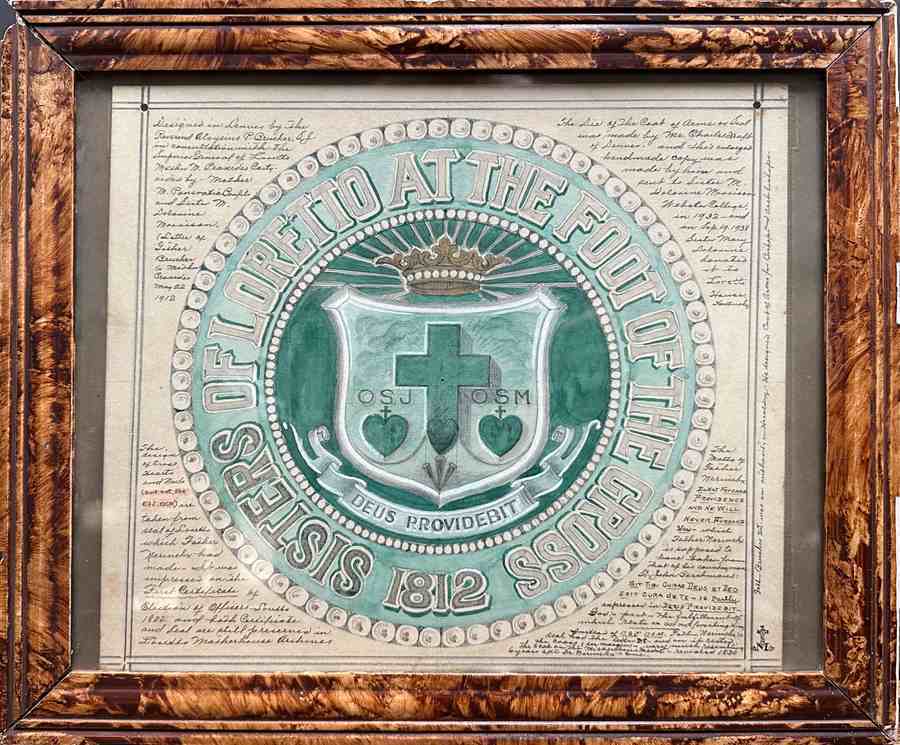
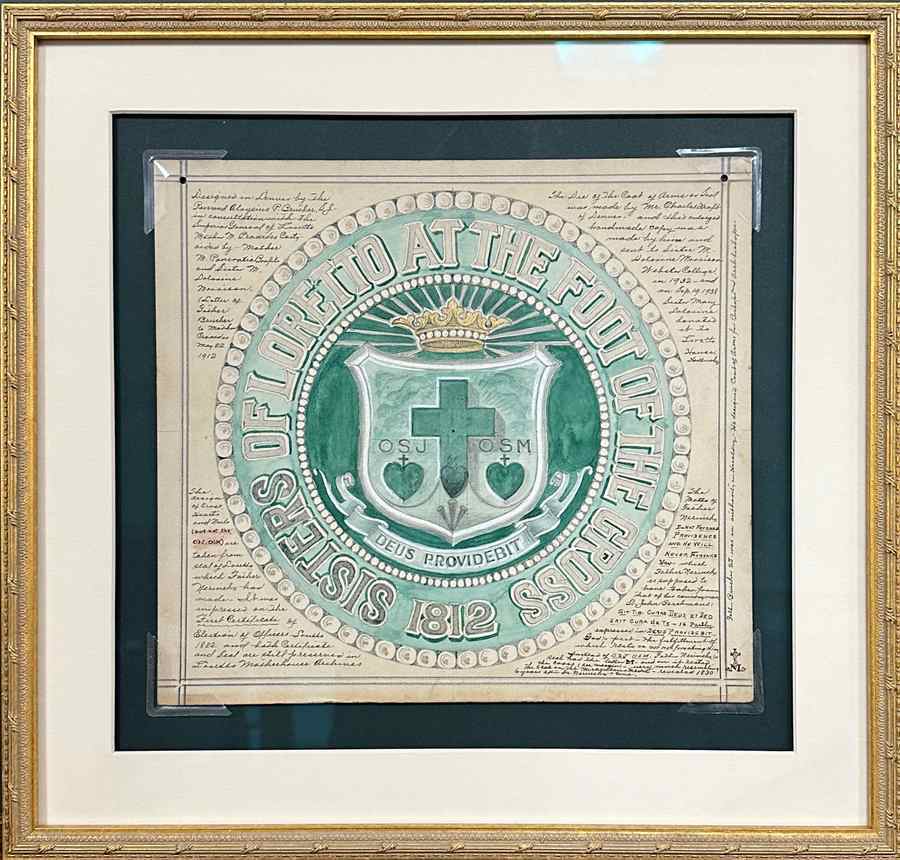
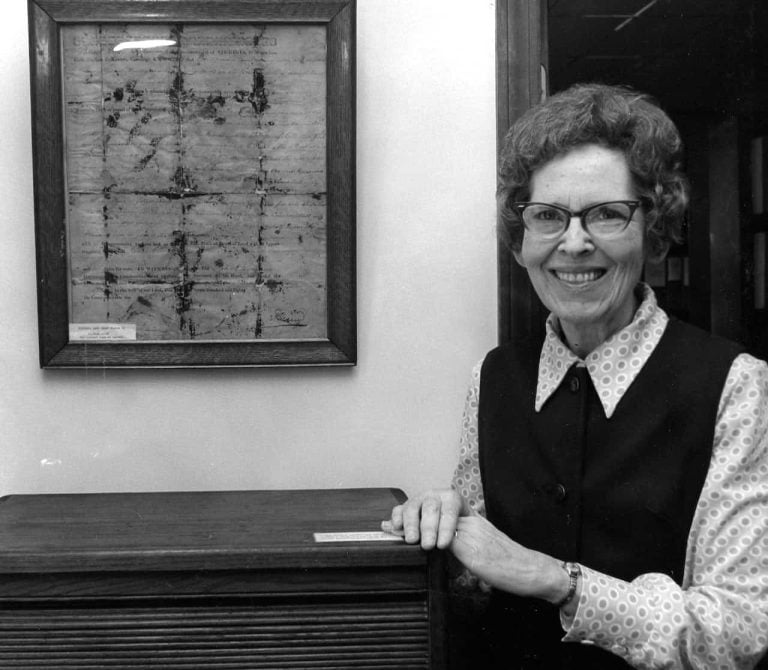
Fortunately, this piece was found to be in fair condition. It was removed from the old frame, fastened to an archival board with acid-free Polyethylene corners and spaced from the glass with archival matboard cut to fit.
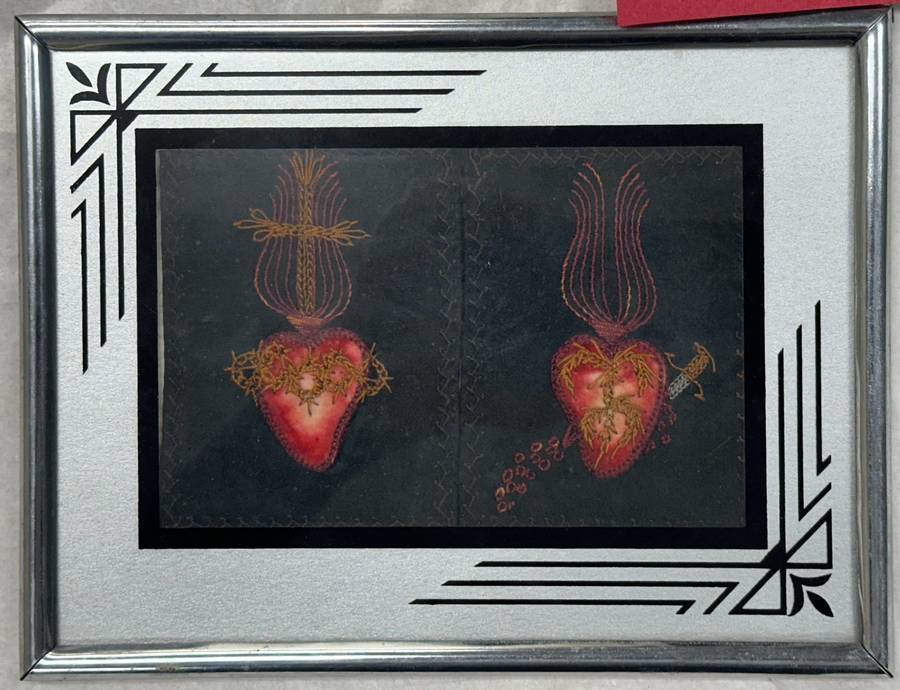
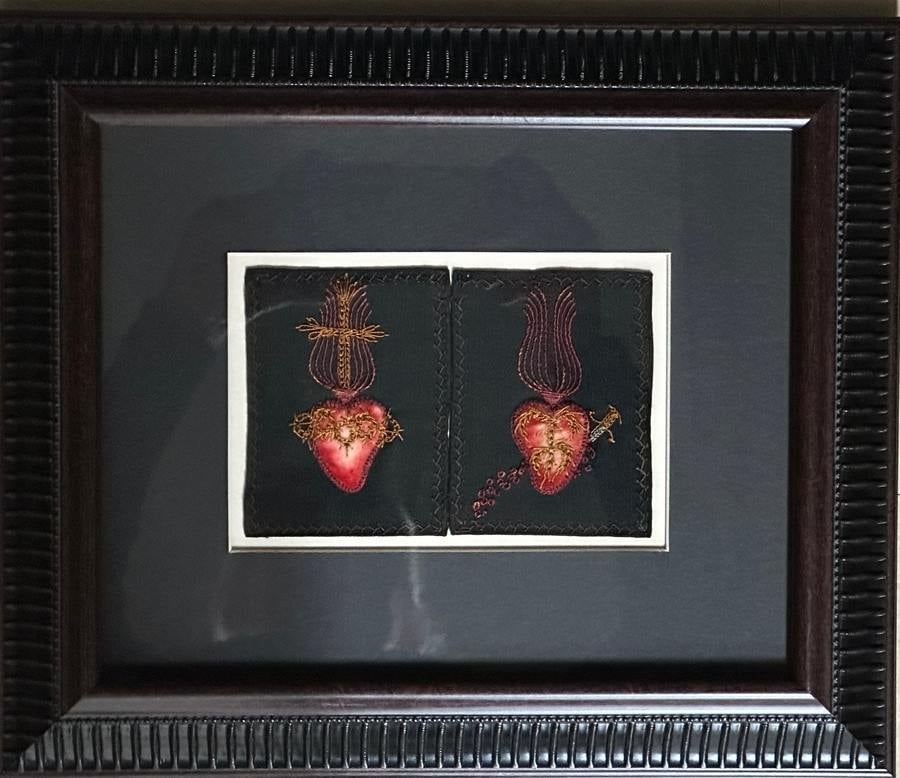
M. Mary Rhodes’ veil hearts were rescued from this little metal frame, hand-stitched to an acid-free backing, then spaced away from the glass with archival matboard cut to size.


Thank you, Angela. You see so much. I believe that I would be exhausted, but you bring it to us in bite-sizes. (I know, I’ve mixed metaphors!)