Feature

Feature
Good afternoon, everyone, and welcome to this fourth session of Loretto’s Lenten reflections on the Seven Sorrows of Mary.
Today we’ll spend time reflecting on the “station” where Mary meets her condemned and suffering son, carrying the cross, the instrument of his own torturous crucifixion and death.
As the crowd led Jesus away to his death, Simon of Cyrene, who was just coming into Jerusalem from the countryside, was forced to follow, carrying Jesus’ cross. Great crowds trailed along behind, including many women who were weeping and crying out.
But Jesus turned and said to them, “Daughters of Jerusalem, don’t weep for me, but for yourselves and for your children. The time is coming when they’ll say, ‘Lucky the women who never conceived! Lucky the wombs that never gave birth! Lucky the breasts that never gave milk!’ People will beg the mountains to fall on them and crush them, and the hills to bury them. For if things such as this are done to me, to a living, green tree, what will they do to you?”
Luke 23:26-31 (combined from The Message and The Living Bible)
In the first of these Lenten sessions, Johanna Brian, reflecting on Donna Day’s presentation, commented that in AA they talk about “people being God with skin on.” Today, instead of imagining how it might have been for Mary seeing her son being tortured, I want to invite us to be “Mary with skin on.” This beloved Mother of Sorrows embodied the same Divine energy that sees through our witnessing, that listens through our hearing, that weeps in our grieving, that embraces through our holding, that loves through our loving. Let Mary say to you, “Now, my sister, woman of sorrows, tell me of the suffering you have witnessed, or borne, and what that is or has been like for you.”
I have 3 photos I want to share with you. (Click the title of each to view the image.)
This icon is entitled “Mother of the Disappeared,” written—as is said of icons—by Robert Lentz, OFM who referred to it as a new Mother of Sorrows. Lentz was very moved, obviously, by the tens if not hundreds of thousands of Latin American mothers who had family members abducted, “disappeared” by death squads. In 1976, Argentinian women whose sons or daughters had been murdered or disappeared marched daily around the plaza outside government offices wearing black dresses and white scarves, carrying a photo of their missing loved ones.
They wore a red rose bud for those who had been killed, or a white one if they hoped their son or daughter might be alive. Lentz depicts Mary as wearing both, standing in solidarity with all sorrowing mothers.
And since she would not have had a photo of Jesus–who was also abducted by government sanctioned death squads–Lentz depicts her carrying the crown of thorns worn by Jesus.
The white handprint smeared across the side of the icon was the signature of the El Salvador death squads. Lentz wanted this to shock us, as it appears that the icon has been violated, just as the death squads violate icons of God every time they abduct and torture a human being.
Imagine yourself as a mother or sister of sorrows. What are the sorrows you have experienced or carried, perhaps for a short while, perhaps for a lifetime? … What has pierced your heart? … How were you changed by the experience?
This photo I also consider an icon, a present-day depiction of our Mother of Sorrows. Hidaya Al Motawaq is cradling her son Mohammad, who is 1 ½ yrs and weighs under 10 pounds. (photo credit: Anas Baba/NPR; early August, 2025) This photo became iconic in August, 2025 when children were starving because of the blockades on food entering Gaza. I imagine that Mary, the mother of Jesus, may have looked very much like Hidaya.
Walter Burghardt, a Jesuit theologian, once described contemplation as taking “a long, loving look at the real.” Can you take a long, loving look at Hidaya and Mohammed? What are the thoughts that arise in you?… The feelings? … Horror? … Guilt? … Tenderness? … What is the shocking violation here? In Greek, “compassion” literally means “to let one’s innards embrace the situation of another.” Let yourself feel compassion and love for Hidaya and Mohammed …. What do you, as a mother or sister of sorrows, want to say to Hidaya? Even in your helplessness, is there anything you want to offer her?
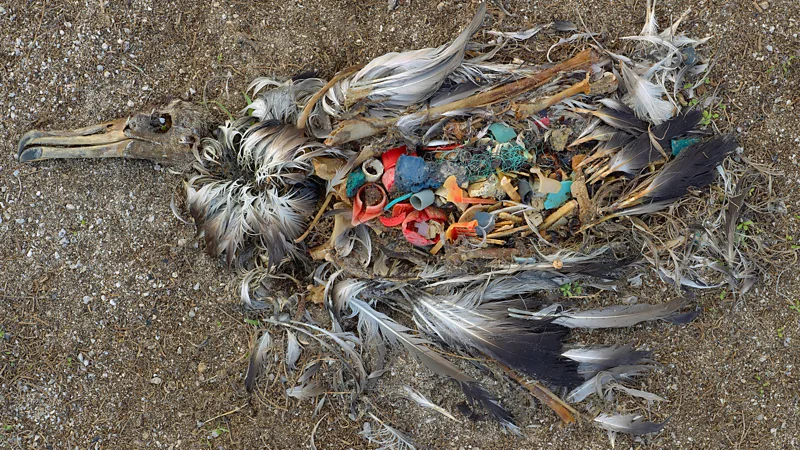
While this isn’t a traditional icon, I’m using it in that sense here. Robert Lentz said of his icons that they make a theological statement, and that they are designed to lure us into a deeper reality. Chris Jordan, photographer, absolutely wanted this and other similar photos to make a statement about one of the irreparable ways in which we humans are, literally, trashing Earth and killing living beings.
When I first saw this photo, my initial reaction was “Look, there goes the Lamb of God!” Now, I had never described another being in that way, but upon reflection I thought that this albatross really did, unknowingly of course, remove the human sin of our obscene amount of plastic waste. Albatrosses can live more than 60 years, and fossil evidence suggests that they existed about 23 million years ago. This albatross, like millions? billions? of birds, fish, ocean mammals are consuming or being trapped in our sin, our human waste until they are sick unto death.
Imagine yourself as the eyes, the hands, the heart of Mary. What would it be like to come upon this creature? What words describe your initial reaction? What is the shocking violation here? What does it mean to let your innards embrace the situation of this winged creature? What is it like to take a long loving look at this reality? How is your heart moved? Is there anything you, as a mother or sister of sorrow, would like to say or to do for this sister creature?