LOREtto

LOREtto
This article was republished from the Fall 1976 issue of Loretto Magazine. When available, the original photograph used in the publication was scanned. Where the original photos couldn’t be located, scans from the magazine were used. Photo captions have also been reproduced. Former members names have been redacted to protect their privacy. Language used in the piece was not altered and may be considered outdated. Statements made in this article may not reflect current attitudes and understandings of Loretto and United States history.
This article takes a look at where Loretto fits into the United States Bicentennial. Next year, America will be celebrating its Sestercentennial (250-year anniversary). To commemorate this occasion the Kentucky Historical Society is issuing grant funding for history projects that reflect on Kentucky history. The Loretto Heritage Center has been awarded one of these grants to digitize and make available our records from Kentucky schools.
Sister Florence Wolff was Loretto Archivist from 1974-1987 and Assistant Archivist for many years before that. Sadly, some of the artifacts mentioned in this piece have been sold, including the land grant signed by Patrick Henry. Loretto Magazine is still running and current issues can be viewed here.

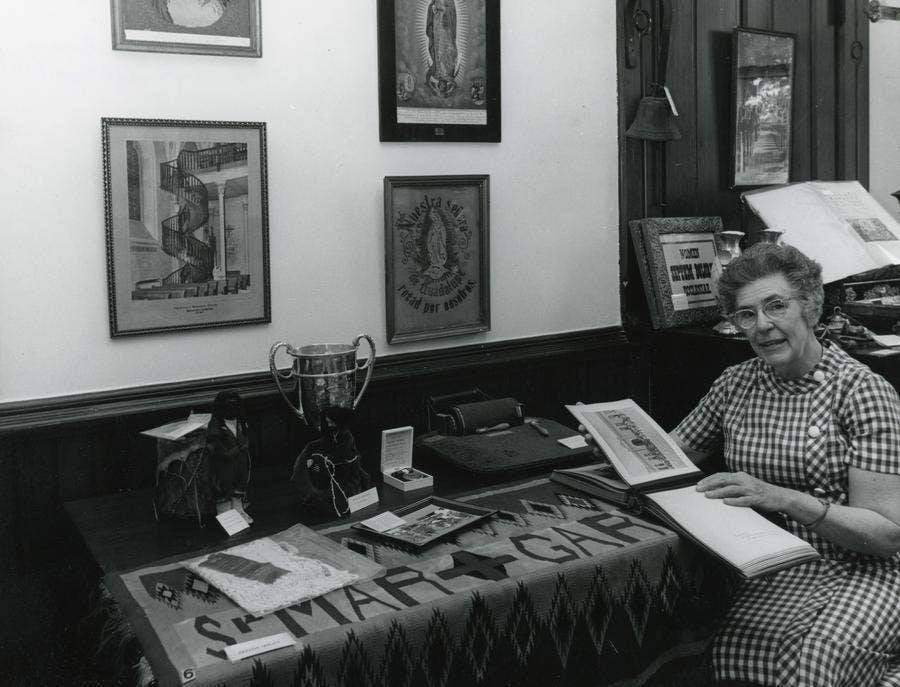
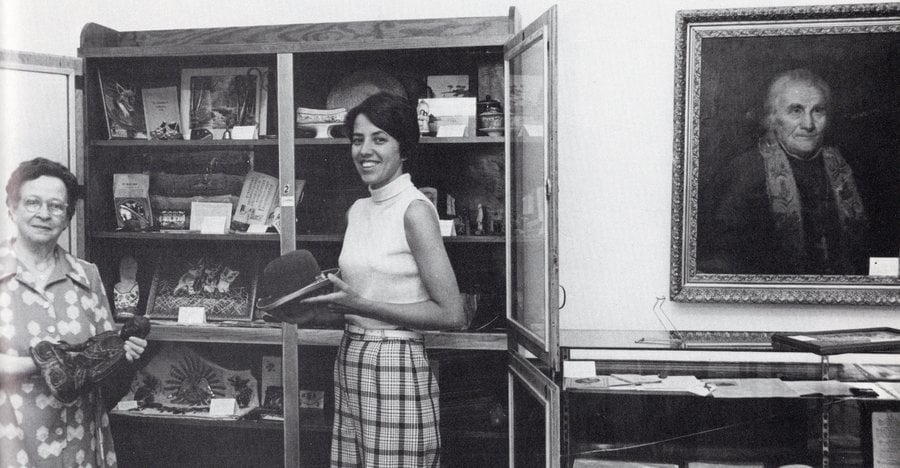
The Sisters of Loretto with their purely American heritage and spirit are of the very marrow of American history. It is significant, therefore, and not merely coincidental, that the Loretto Museum (now the Heritage Room) and Archives [Loretto Heritage Center] at the Motherhouse, Nerinx, Ky. were renovated and reorganized at the same time the country was celebrating its bicentennial.
The year 1776 was an important one in the American colonies; it was also a special one in the family of Sebastian and Petronilla Nerinckx in Flanders when their seventh child, John Henry, was born. Charles, his oldest brother, was, at the time, already beginning his Latin studies preparatory to the philosophy and theology programs at Mechlin and Louvain. Both boys were to be much affected by the revolutionary activities of their lifetime, and both were to become priests and to join in founding religious communities of women engaged in teaching; the one in England, the other in America.
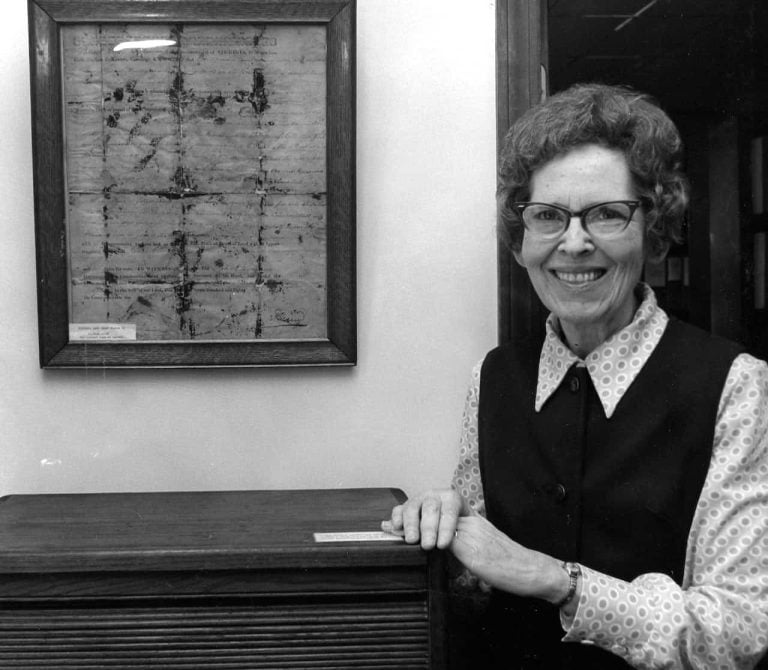
A precious document and several rare books link Loretto to the very first days of the new republic. The Treaty of Paris of 1783 extended the boundaries of the Commonwealth of Virginia west to the Mississippi, and thus included the present state of Kentucky. In the Archives, Loretto treasures a preemption treasury warrant, a land grant signed by Patrick Henry, April 1st 1784. In the fashion of these old surveys, the boundaries are indicated by such natural phenomena as specific kinds of trees, surrounding Indian Lick, “on both sides of the Rolling Fork.” The grant, no doubt, defines the land at Calvary, which became Loretto’s first branch establishment and where an academy was conducted from 1815 until the close of the century.
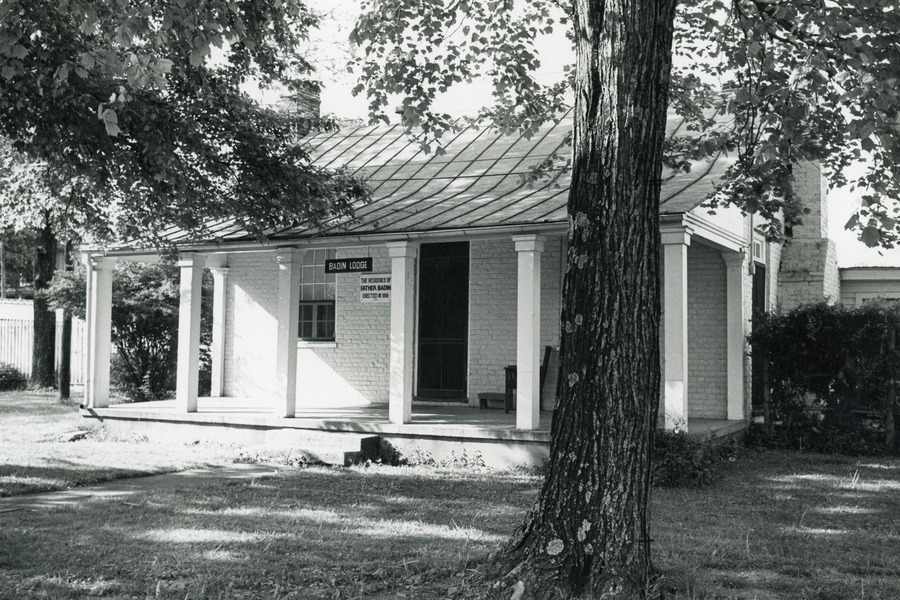
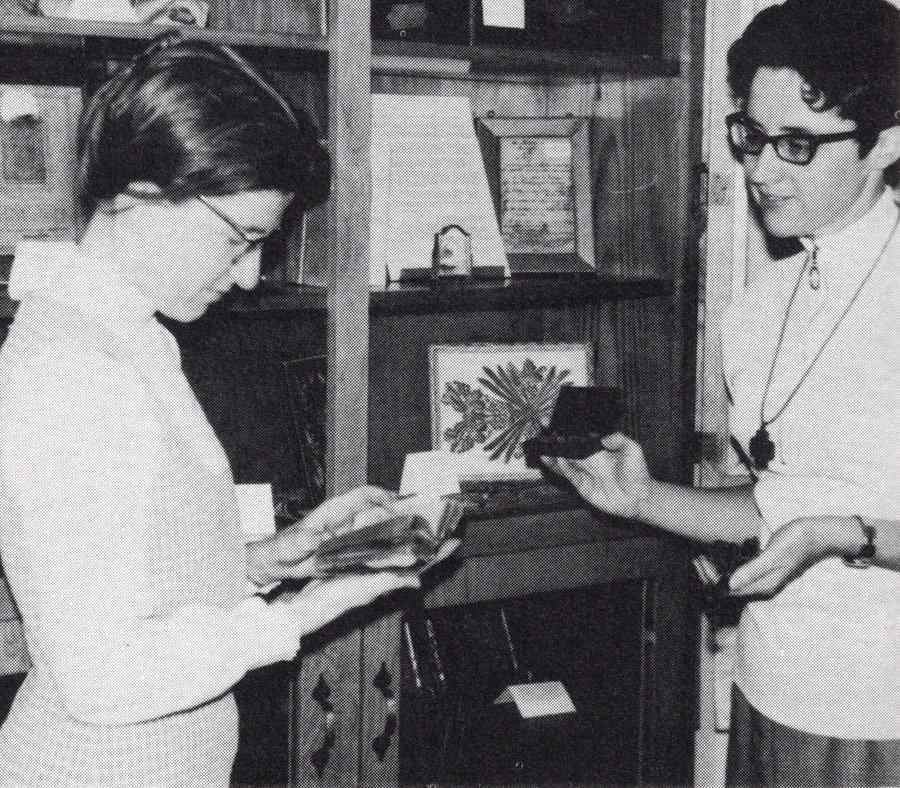
In 1790 the first Catholic Bible was printed in the new country, giving evidence of cultural and religious independence. Loretto cherishes three quarto volumes of this first edition, beautifully bound in tan leather, and inscribed by Bishop John Carroll to Rev. Stephen Theodore Badin and with the signature of Bishop Chabrat on the inside covers. All three men were involved with Loretto’s early history: Bishop Carroll, as the first bishop in the United States, welcomed Rev. Charles Nerinckx and assigned him to Kentucky; Father Badin was the first priest ordained in the United States and lived on the site of the present Motherhouse grounds; and Bishop Chabrat succeeded Father Nerinckx as ecclesiastical superior.
While constitutional convention was in session, and John Carroll was setting up his diocesan plans and procedures (1789), Father Nerinckx was beginning his exile from his parish ministry, because of his non-conformity with the revolutionary forces in Europe. Providentially, this disagreement was to be the prelude to his coming to America. He reached that decision in 1803, when the boundaries of the United States were enlarged by the famous Louisiana Purchase under Thomas Jefferson. It was in that territory that Father Nerinckx would later see the Sisters of Loretto make their first foundation in the Trans-Mississippi West, and it would be there that he would give back his missionary to His Maker. (August 12th, 1823, Ste. Genevieve, Mo.)
It was in Jefferson’s administration also, that Father Nerinckx came to America and soon was on his way to the young state of Kentucky, to begin his arduous and extensive missionary labors. He rode by wagon trail and horseback over the trails blazed by the early American pioneers who had migrated to that part of the then far west of the United States.
In 1812 these pioneer Kentuckians were congealing into small communities, but being so far away from the Atlantic Coast, they felt little effects of the War between England and their country. It was that historic year, however, that marked the beginning of the Sisters of Loretto on Hardin’s Creek. Mary Rhodes, the co-founder with Father Nerinckx, had been born in Maryland during the very year Benjamin Franklin, John Jay, and John Adams (1782) were in Paris negotiating the treaty which sealed the War for Independence. It was this young woman who after her coming to Kentucky and seeing the lack of educational opportunities for the children, received the inspiration to open a school and to found a religious community which would seek the glory of God by praising Him and ministering to His people. From Mary Rhodes’ little log cabin school and convent would grow a congregation of American sisters who would thereafter be in the vanguard of American history.
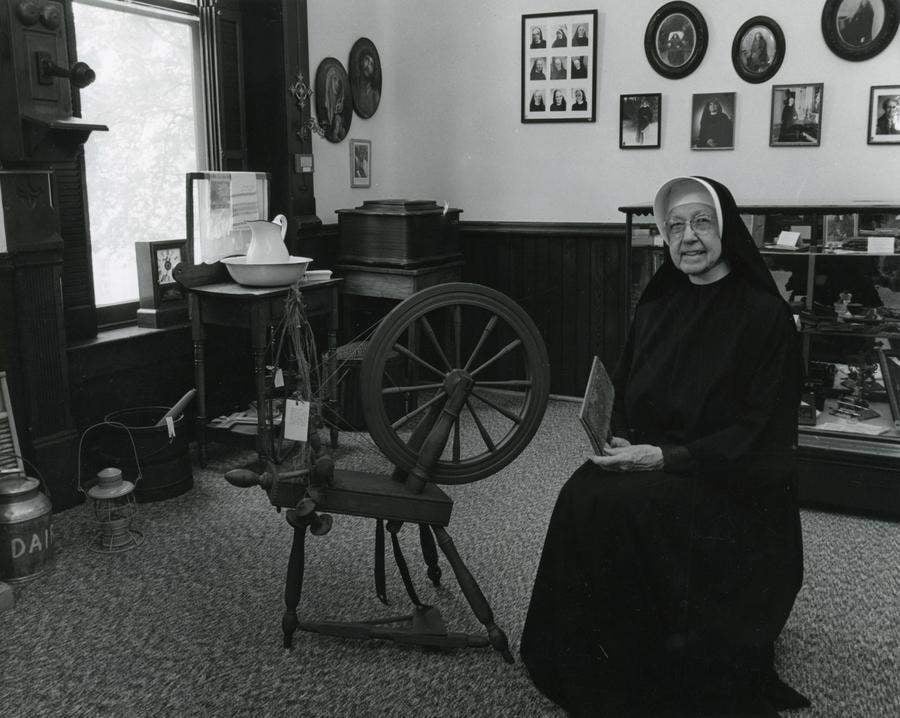
The development of the Sisters of Loretto in Kentucky was steady and solid. As early as 1834, they were able to build a large brick academy on the Bardstown Pike, where many of Kentucky’s early families educated their daughters, and where it is a tradition that the perennial presidential office seeker from Kentucky, Henry Clay, gave one of the early Exhibition Addresses, closing the school year. A few of the artifacts in the Loretto Heritage Room and Archives indicate the breadth and depth of the education received by the girls of those academy days, there is evidence of a curriculum which included not only religion and the three “R’s” but also science, foreign languages, and the fine arts, as well as the practical skills of spinning and weaving.
The westward movement of the Sisters of Loretto began shortly after the Missouri Compromise was signed. In 1823 they moved into Missouri to open a school at the Barrens in Perry County, Missouri. The call to work with the Indians in Kansas came in 1847 where the Sisters went to do noble work among the Osages until the American government moved these Indians to Oklahoma and prohibited the Sisters from accompanying them.
The treaty of Guadalupe Hidalgo in 1848 added the great Southwest to the United States. Only four years later, the Sisters of Loretto responded to Archbishop Lamy’s appeal for educators in the New Mexico Territory, and ventured forth on the wagon train trip of two months along the famous Santa Fe Trail, which brought them to their adobe home and the beginnings of their long and devoted service among the peoples of that area.
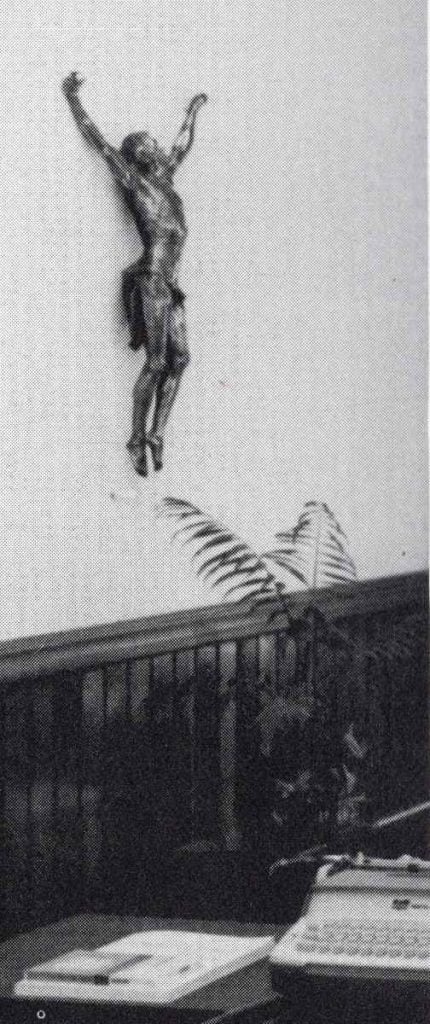
Although there are few extant documents telling of the effect of the Civil War upon Loretto, we can conjecture the problems created for them in Kentucky, one of the slave states which ultimately lined up the Union, but which also had a contingent of citizens joined to the Confederate government. Because of its location, there were children and Sisters in the Kentucky schools having both southern and northern loyalties. During these hard war years, however, Mother Berlindes Downs, who, as a child, had been one of the beloved orphans at Little Loretto, built the present chapel by 1863 and raised enough money to cover completely its costs.
In the records of Osage Mission, where the Sisters taught the Indians, there is also some Civil War data. There we read that a large troop of soldiers attempted to sack both the convent and the church, but were deflected from their course by the Sister who courageously and generously treated them with all the fresh milk and cream from the convent dairy, and by the simple confrontation the pastor, Father Ponziglione, who dissuaded them from robbing the church. Because the Sisters were so fearless on this and so many other occasions, it is recorded that one of the Indians living at the Mission paid them the highest compliment he could, “They are true braves.” Also during the Civil War, the Sisters of Loretto made their first foundation in Colorado, answering the need for education among the gold and silver mining population in that territory. The foundation was made from Santa Fe, where some of the struggles between the Union forces and the Texans took place. Mother Joanna led the little band of Sisters from Santa Fe to Denver in 1864, via stage coach, described in her memoirs how they passed Glorieta Battlefield en route and could hear the roar of the cannons. It is to Mother Joanna also that we owe what was probably an apt description of the effect of the Civil War on many Loretto Sisters and pupils in Denver:
Though there was sameness in our daily duties, we could not complain of monotony, as from time to time we used to hear of war events, battles lost, battles gained, urgent proclamations for thousands of new recruits, guerrillas, mail coaches robbed and burned – thus cutting off communications with any of our houses. Finally, “Richmond is taken” came flashing on the wires, news joyful to some of our boarders, sorrowful to others.
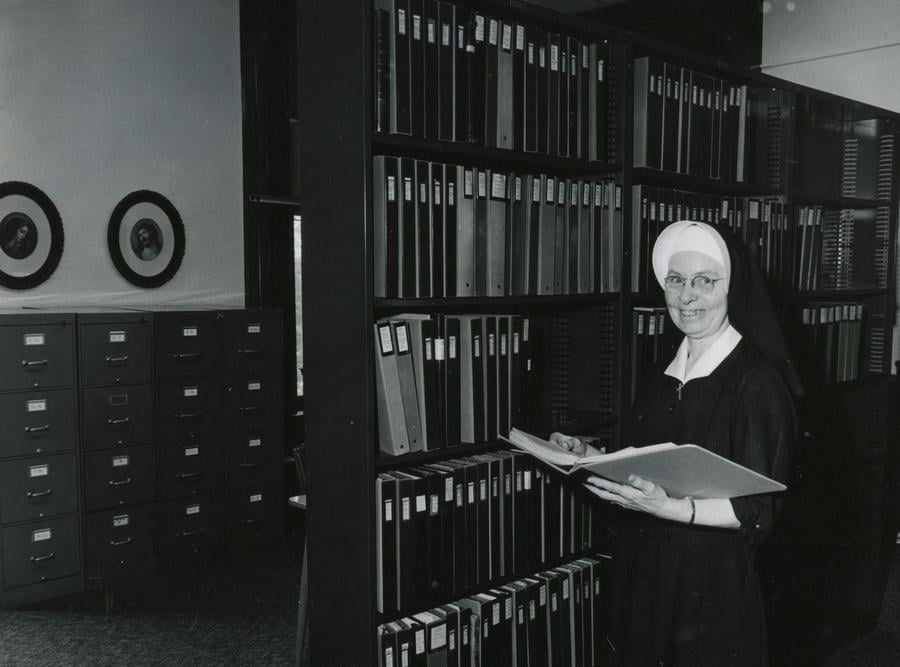
In 1893 the United States celebrated the fourth centenary of Columbus’ discovery of America with a mammoth World’s Fair in Chicago. At that Columbian Exposition, Loretto Sisters and students had a large educational exhibit, which was awarded several medals and ribbons, which are still preserved. More interesting, however, than the medals are the 20 bound volumes of the children’s work which were collected from Loretto schools in many parts of the country, and which were exhibited at the fair.
But the last decade of the 19th century was not just “gay nineties” for the Sisters of Loretto. Following the collapse of the silver market, anxious days came to the Sisters in the financial crisis they faced in the new building at Loretto Heights in Denver. Thanks, however, to the business acumen as well as the deep faith and courage of Mother Praxedes Carty, who became the superior general in 1896, the Heights was saved from bankruptcy.
This achievement was only one of the many manifestations of the vision, intelligence, and fortitude of the woman who was to have a giant place in the history of the Loretto Society. She not only read the signs of the times, but carried forth projects and plans unique in her day. She was able to have the Loretto Constitutions approved in 1904 and confirmed in 1907 as those of a papal congregation, thus freeing the community for wider service. It was Mother Praxedes, also, who, in the second decade of the 20th century seriously reflected on the contemporary struggle for women’s suffrage. Realizing that if women were to have equal status and opportunity, their educational goals would likewise have to be stretched, she dared to open the first Catholic college for women west of the Mississippi, Loretto College (later Webster) in St. Louis in 1916, and two years later, Loretto Heights College in Denver. These openings preceded the passage of the Thirteenth Amendment [sic: Nineteenth Amendment] to the United States Constitution in 1919 [sic: 1920], giving women the right to vote.
Like the Civil War, World War I also had its repercussions on the Sisters of Loretto. Documents indicate their interest in the patriotic and humanitarian activities of the day: in providing knitted clothing for the soldiers, bandages for the wounded, religious goods for the Chaplains’ Aid Association, funds for the Fatherless Children of France and the Friends of Belgium, and personal service in volunteering as nurses in the influenza epidemic at Fort Zachary Taylor. There 11 Sisters volunteered to nurse the sick soldiers, and the youngest among them, Sister Jean Connor, succumbed to the disease and was accorded a military funeral. Undaunted by this sacrifice, another contingent of volunteers went forth to perform the same services for the miners of eastern Kentucky in the spring of the following year.
Later in the 20th century, the missionary zeal of the Sisters of Loretto reached new spheres of activity, as their country began a commercial and humanitarian involvement in the Orient and later in South America. The Open Door Policy allowed the Sisters of Loretto to go to China in 1923, where they worked until they were expelled by the communists in 1952, after spending their last days there in a concentration camp. In the sixties when President Kennedy was building his Alliance for Progress and the Church was calling for missionary assistance in Latin America, Loretto answered by opening three bases of activity in South America – in Bolivia, Peru, and Chile.
Drastic social and technological changes have affected the country in the seventies and Loretto has responded by broadening its base of the service and building a new government. In the bicentennial year it celebrated the country’s birth date and its own historical development with an assembly of many of its members at the Motherhouse, where the Sisters not only looked to their past in the Heritage Room, Archives and other historic spots, but also planned for the future. The symbol of the Bicentennial – the double eagle, with one facing toward the past and the other toward the future – can well serve as the symbol of the Sisters of Loretto, America’s first religious community of women to be established and to continue without foreign affiliation.