Feature
Feature
By Stephanie Menchey*
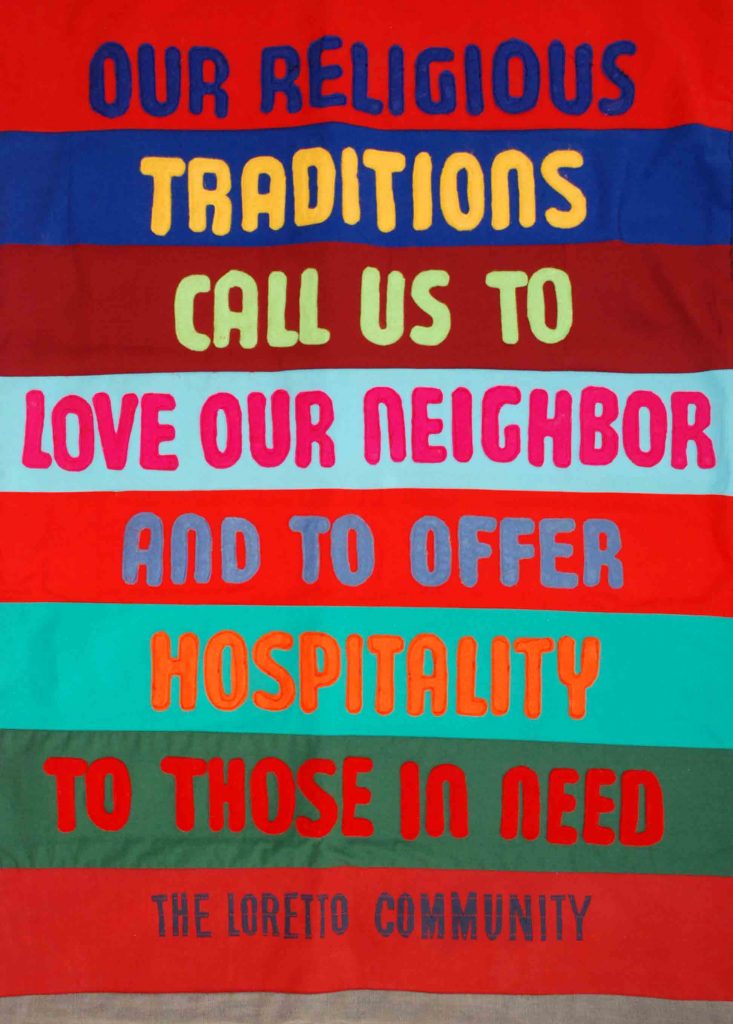
They are everywhere, every city, every state, every country, yet somehow, they remain invisible. Not because they aren’t there, but because we choose not to see them. We cross the street when they approach, tuck our heads, stare at our feet and pretend not to hear when they speak. We silence their voices with indifference and erase their presence with avoidance. These are the homeless. Not statistics. Not shadows. Human beings.
They once had homes. They once had families. They once had hope. Now, they fight to survive each day, alone, hungry, cold, searching for the smallest flicker of kindness to keep going. And we walk by, letting a soul, a fellow human being, suffer without guilt. We forget that they were once just like us: people with dreams, laughter and love. We say it’s not our fight. We say it’s someone else’s problem, the city’s, the state’s, the government’s. Right? Wrong. They are our fellow human beings. They are our problem.
We live in a world where sleeping is becoming illegal. Cities pass ordinances banning rest on sidewalks, in parks, under bridges, as if exhaustion were a crime, as if the act of lying down is a threat. We criminalize survival. We punish poverty. We turn away from suffering. Some of the homeless are mentally ill, young and old. Some have medication. Some don’t. Some have no access to doctors, no access to care. And so they die alone. Quietly. Forgotten. Does anyone care?
We say “home is where the heart is.” But what happens when someone has no home? Does that mean they have no heart? Their home is the concrete beneath your feet, a place with no privacy, no electricity, no safety. A place where they are stared at as if they are less than human. But they are not less. They are a soul in the street. A heart that still beats. A mind that still thinks. A life that still exists. A heart that once laughed. A mind that once dreamed. A soul that once sang. A life that once had meaning and still does.
They fight for charity. For clothes. For food. For hygiene. For a shower. For dignity. We give only during the holidays, if at all. We give when it’s convenient. We give when it makes us feel good. But they need more than seasonal sympathy. They need consistent compassion. In courtrooms, they are processed like paperwork. Some are victims of violence. Some are offenders shaped by trauma, addiction or desperation. Social workers are few and far between. There is no one to advocate for them, to offer alternatives to jail, to ensure those with mental illness receive treatment instead of punishment.
In hospitals, especially emergency rooms, they arrive broken, physically, emotionally, spiritually. They are discharged with no plan, no follow-up, no support. They return to the streets, untreated and unseen. In jails and prisons, they are warehoused. Not rehabilitated. Not healed. Just hidden. In detention centers, children in state care wait for someone to notice them, to love them, to fight for them. But the system is overwhelmed. And so they wait. And wait. And wait.
In long-term care facilities, the elderly are often forgotten. They sit in silence, longing for connection. Those who remain at home struggle with isolation, with illness, with the slow erosion of independence. And still, we look away. Veterans, those who served, who sacrificed, return to a society that often fails to serve them. They battle PTSD, homelessness, addiction. They are left to navigate a maze of bureaucracy with no guide, no advocate, no support.
And through it all, we continue to walk by. We continue to say, “It’s not my fight.” But it is. It is all of our fight. We need more than charity. We need change. We need compassion woven into the systems that shape our lives. We need social workers in every courtroom, every hospital, every school, every shelter. We need leaders who care. We need communities that act. Because every time we look away, we lose a piece of our own humanity. They are not invisible. We just refuse to see them.
When we refuse to see them, we also refuse to see the truth about ourselves. We build walls of comfort and convenience, shielding our eyes from the pain that exists just beyond our doorstep. But pain doesn’t disappear because we ignore it. It grows. It festers. It spreads through generations, children raised in shelters, teens aging out of foster care with nowhere to go, elders dying in silence, veterans sleeping under bridges. These are not distant tragedies. They are happening now, in our neighborhoods, on our streets, in our cities.
We must ask ourselves: what kind of society do we want to be? One that turns its back on the vulnerable, or one that reaches out with empathy and action. Because the truth is, homelessness is not just about lacking a roof, it’s about lacking connection, dignity and opportunity. It’s about being seen as a burden instead of a person. It’s about being treated as disposable. But no one is disposable. Every life matters. Every story deserves to be heard. Every person deserves a chance to heal, to grow, to belong.
Imagine a society where every person in crisis has someone to walk beside them. A social worker who understands trauma, who listens without judgment, who knows how to navigate the maze of systems and services. Imagine shelters that don’t just offer a bed for the night, but a plan for tomorrow. Schools that don’t just educate but heal. Hospitals that don’t just treat symptoms but restore dignity. Prisons that don’t just confine but transform. This is not fantasy, it is the future we can choose.
But choosing that future means confronting our own discomfort. It means acknowledging that we have failed, not because we are cruel, but because we have grown numb. We have normalized suffering. We have accepted inequality as inevitable. We have allowed bureaucracy to replace compassion. And in doing so, we have lost sight of what it means to be human. To be human is to care. To be human is to act. To be human is to see the pain of another and say, “I will not look away.”
So let us begin again. Let us build a world where no one is invisible. Where every soul is seen, every voice is heard and every life is valued. Let us be the generation that chose compassion over convenience, justice over silence and humanity over indifference. Because when we choose to see, we choose to heal. And when we choose to heal, we choose to truly live.
*Stephanie Menchey is working toward an associate’s of applied science degree in social work and certificate of completion in drug and alcohol abuse counseling at El Paso Community College. She is serving as a Loretto Justice Fellow at the Opportunity Center for the Homeless. Stephanie shares: “I’ve always stood with the underdog, using my voice, fierce determination and unapologetic stubbornness to call out injustice. Life threw me into storms that many might not have recovered from, but I didn’t just survive — I rewrote the narrative. I reject labels like “victim” or “survivor” and refuse to let my disabilities define or limit me. At 46, I chose to pursue a master’s degree in social work — not just to uplift those in my community, but to show that trauma and disability are not roadblocks to a meaningful life. They’re part of a journey that can fuel growth, purpose and impact. My mission is to prove that resilience isn’t about avoiding hardships, it’s about rising, again and again, and helping others find the strength to do the same.”