Feature

Feature
The Loretto Feminist Network (LFN), also known as the Loretto Women’s Network, has strong roots in the Loretto Community. Over the years, the Community has supported and worked for justice on the concerns and disadvantages that women and all oppressed peoples face in the United States and abroad. Throughout its history, the LFN has been part of the Loretto Community, but also retained an independence so as to be able to take broader stands on women’s and allies’ concerns.
Since its beginning the LFN network has claimed feminist roots. In 1981, it defined feminism as follows:
In 2019 LFN updated its identity statement to be more inclusive of gender identities and changed its name to Loretto Feminist Network. We choose the definition of feminism written by Angela Davis and published by the 8th Day Center for Justice:
“Feminism has helped us to recognize a range of connections among discourses and institutions and identities and ideologies that we often tend to consider separately. … Feminist methodologies impel us to explore connections that are not always apparent.” LFN recognizes the intersections of racism, capitalism, heterosexism, patriarchy and the related structural oppressions.
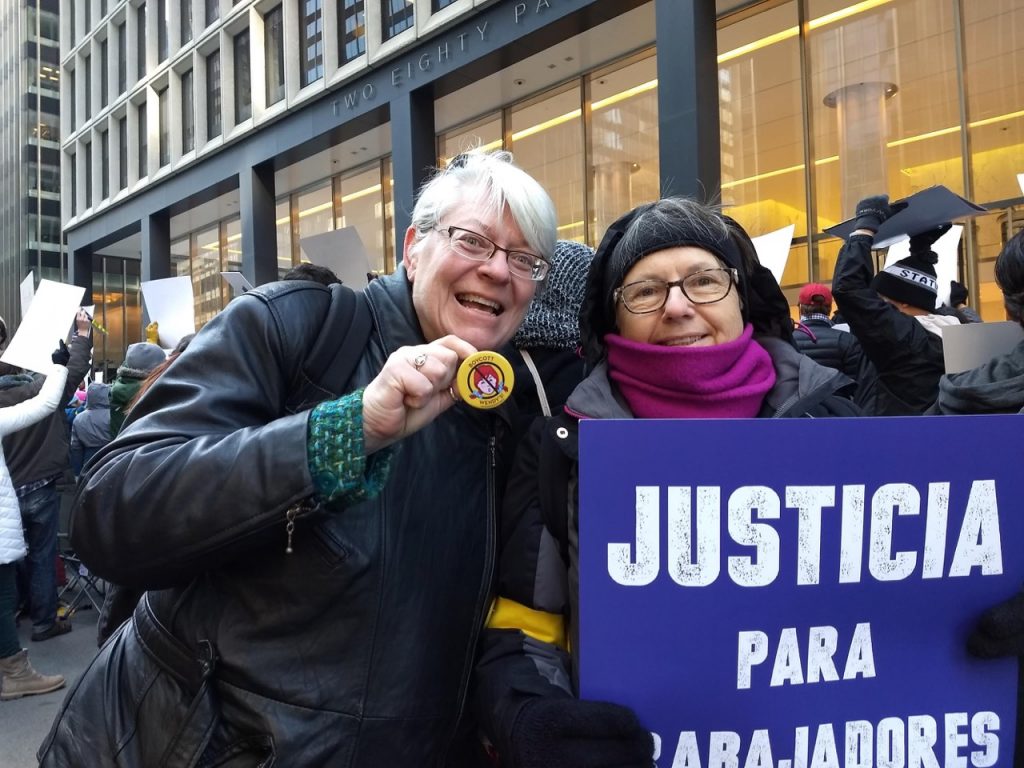
Most recently the LFN coordinators have read the book, “Feminism for the 99%: A Manifesto” by Arruzza, Bhattacharya & Fraser (2019). This work clearly explains the connections of “isms,” noting that feminists must unite with other antisystemic movements. “Only in this way – by connecting with antiracists, environmentalists, and labor and migrant rights activism – can feminism rise to the challenge of our times” (p.5).
In 2020, the policies and practices that negatively have an impact on women are still with us. While much has improved since the 1950s, there is still work to do. We encourage anyone concerned about these issues to join us in our work.