
The Loretto Motherhouse was first built in 1824, but the land on which the Motherhouse is located has an even longer history. It was originally home to multiple Native groups, including Cherokee, Haudenosaunee, Shawnee and Yucchi. There were also ancient Adena and Hopewell mound-building cultures. These cultures formed into five distinct entities as they moved down the Ohio River: Kaw, Omaha, Osage, Ponca and Quapaw.
We give thanks for our Loretto forebearers and all who have followed in their desire to be faithful to God’s call. The land in the lush Kentucky heartland on which the Motherhouse is now located, taken by white settlers from the Native peoples, came to Loretto women whose prayer and service developed it into a legacy of life and love. Supported by the unpaid labor of people of color, Loretto women gave the fullness of their lives to sharing God’s life and love with all: neighbors of all races, first peoples and eventually around the globe.
Our faith, our dedication, our community life, our mission — all are meant to constitute a single gift of praise and thanksgiving to the One who freely loves us all.
IATW, Constitutions of the Sisters of Loretto #44
In the early years, the Loretto Motherhouse was named St. Stephen’s Farm by Father Stephen Badin, the first priest ordained in the United States, who lived there from 1796 to 1819. The Badin House, erected by Father Badin in 1816, was the first brick house in Marion County, Ky., and is still in use.
The founding Sisters of Loretto moved from St. Charles, Ky., to the current campus location in 1824. The first school building, Loretto Academy, was built in 1832 and was used as a school until 1888 when the larger academy building was built. Loretto Academy flourished until 1918 when the school was closed. Both buildings are still in use, the first as Rhodes Hall, an art gallery, and the other as a residence, offices, the archives and part of Knobs Haven Retreat Center.
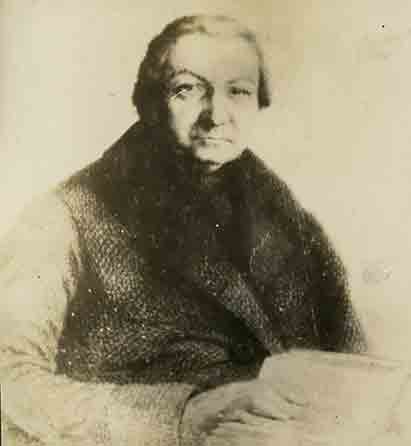
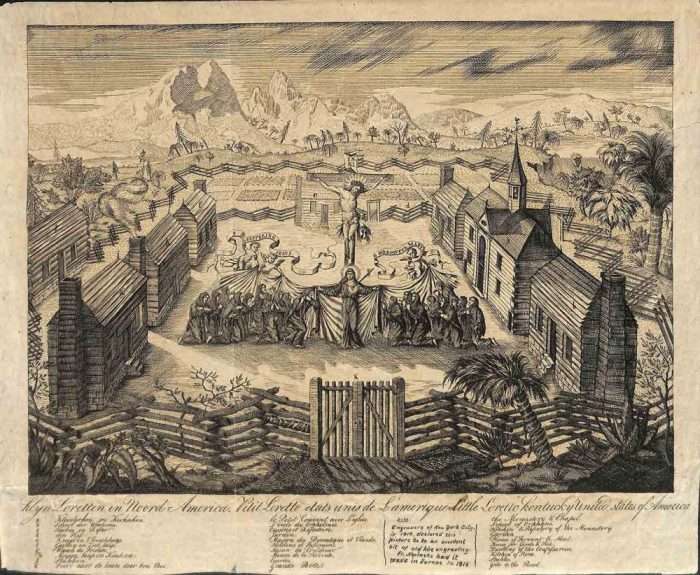
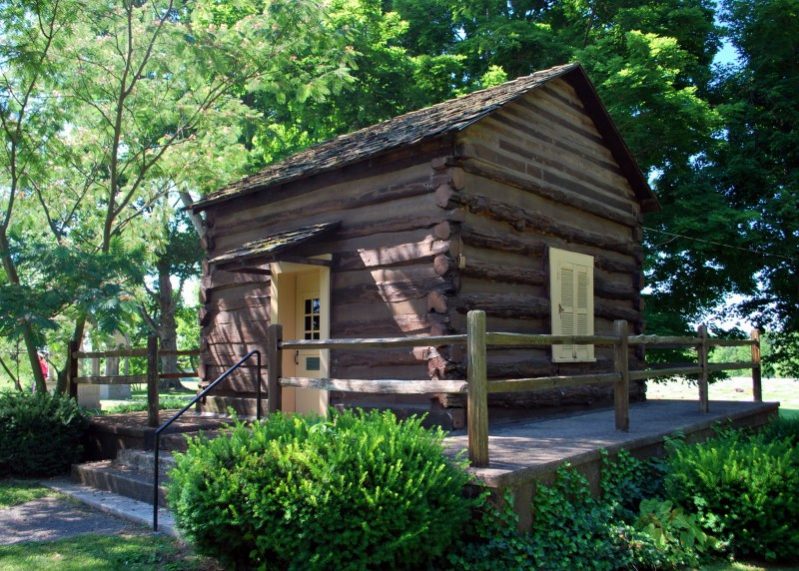
The Rev. Charles Nerinckx, the clerical founder for the Friends of Mary at the Foot of the Cross, lived at St. Charles, Ky., from 1812 until 1824, when he moved to Perryville, Mo. One half of his cabin which he built at Little Loretto in St. Charles was brought to the Motherhouse in 1895.
Other historic buildings include the Church of the Seven Dolors, which was rebuilt during the Civil War (1860-1863) after fire destroyed the original building, and the Auditorium (1886), which has been renovated into a new Heritage Center and Archives. St. Joseph Infirmary (1947), now known as the Loretto Living Center, provides a home and care for aging Loretto members and others.
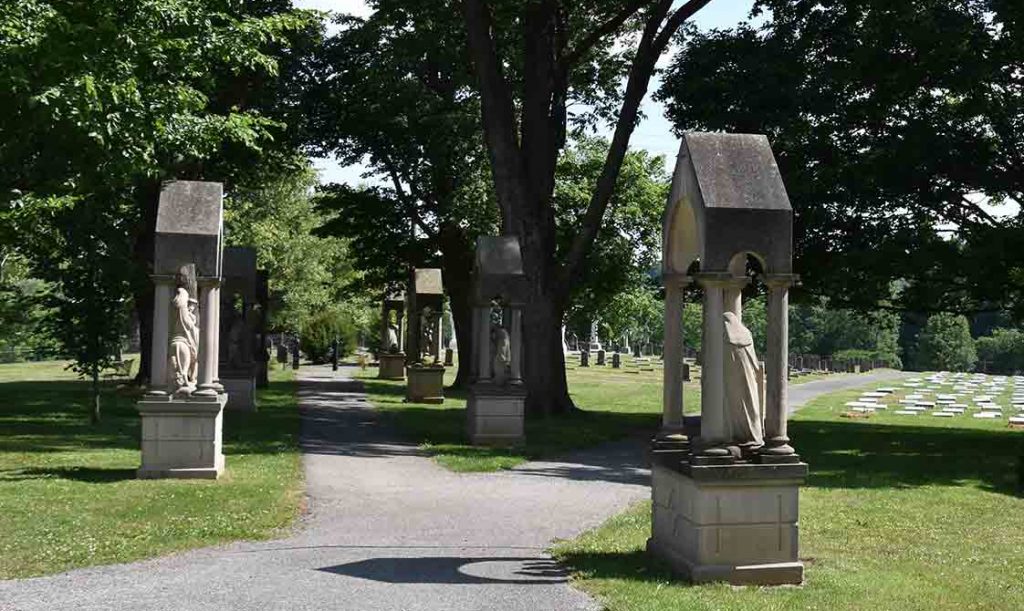
The Stations of the Seven Dolors (1911), a series of statues depicting the sorrows of Mary, flank the sidewalk approach to the cemetery. Buried there are founders Charles Nerinckx, Mary Rhodes, Ann Havern and Christina Stuart, as well as hundreds of Sisters of Loretto. The Slave Memorial placed near the cemetery entrance honors those slaves brought to the Motherhouse as part of the dowries of novices. At the crest of a hill is the AIDS Garden, a memorial to persons who have died of AIDS. It is both a tribute to them and a reminder to all work for justice and act for peace.